
Upper body strength for runners: a practical 20-minute session with controlled exercises and guidance for fitting it around running.
Running is driven mainly by the lower body, but the upper back, shoulders and trunk help maintain posture and organise arm movement as fatigue builds. This 20-minute session uses a resistance band and body weight to train those areas without trying to imitate running at speed.
upper body strength for runners: Set up safely
Use a resistance band in good condition and attach it only to a secure anchor designed to tolerate the load. Check the band for cracks or thinning before every session and keep your face out of its recoil path. Choose resistance that allows smooth repetitions with several left in reserve.
Keep reusable hydration nearby during strength work with bottle options from Mizu Australia.
The 20-minute circuit
Complete two or three rounds. Rest 30–60 seconds between exercises and longer when technique begins to change.
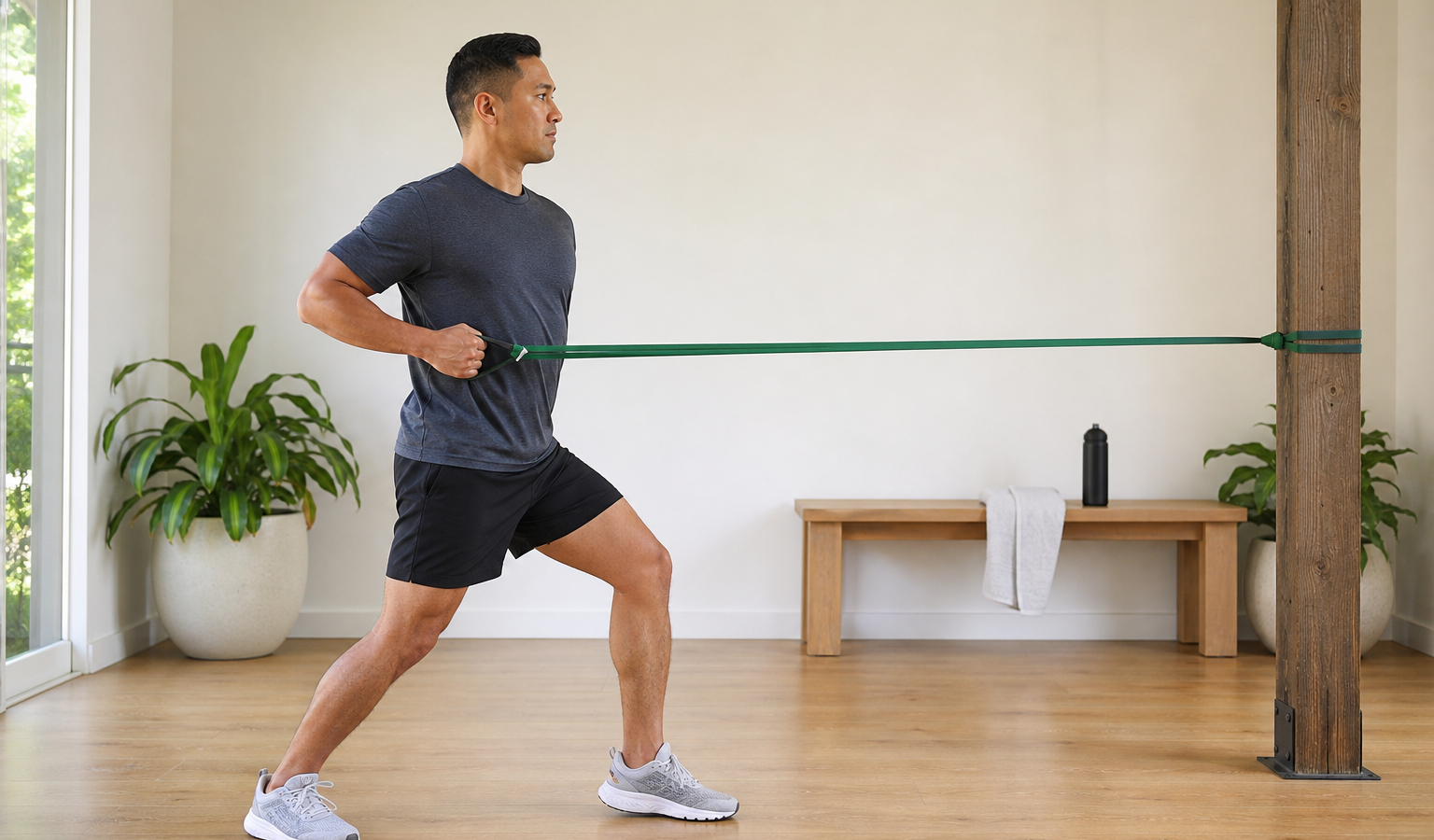
1. Split-stance band row
Face the anchor in a stable split stance. Draw the handles or band toward the ribs while keeping shoulders relaxed, then return slowly. Complete eight to twelve repetitions.
2. Incline push-up
Place hands on a sturdy bench or counter that will not move. Keep the body long, lower under control and press away. Complete six to twelve repetitions, choosing a height that keeps the movement comfortable.
3. Pallof press
Stand side-on to a secure band anchor, hold the band at the chest and press the hands forward without letting the trunk rotate. Pause briefly and return. Complete six to ten repetitions each side.
4. Suitcase carry
Hold one manageable dumbbell or household weight at the side and walk slowly with a tall posture. Use a clear, level path. Walk for 20–30 seconds each side without leaning away from the load.
5. Bird dog
From hands and knees, slide one leg back and reach the opposite arm forward only as far as the trunk remains steady. Return and alternate for six controlled repetitions each side.
6. Wall slide
Stand with the back comfortably near a wall and slide the forearms upward without forcing the shoulders. Complete eight repetitions in a pain-free range.
Compare current watches for training-load and recovery features at Running Watches Australia. Device scores are context, not a diagnosis.
Place strength in the week
Many runners find this session fits after an easy run or on a separate day. Avoid adding unfamiliar strength work immediately before intervals, hills or a long run. During a demanding race-specific block, two rounds may be enough.
Combine it with RunHQ’s calf-strength progression across the week rather than performing every exercise in one large session. The rescheduling guide can help preserve recovery when life changes the plan.
Progress one variable
First add repetitions within the suggested range. Then add a third round or slightly more resistance, but not both together. Stop each set while posture and breathing remain controlled. More resistance is not progress if the anchor, band or technique becomes unsafe.
Conclusion
This short session trains pulling, pushing, anti-rotation and carrying patterns that complement running. Use secure equipment, keep repetitions controlled and finish with enough capacity for the rest of the training week.
Sources and image credit
- Australian Government movement recommendations for adults
- Better Health Channel: resistance training
- Better Health Channel: exercise safety
- Image: original AI-assisted RunHQ editorial artwork. © RunHQ / Charles R Summer.
Related reading: Runner Strength Micro-Session: A Controlled 20-Minute Routine.