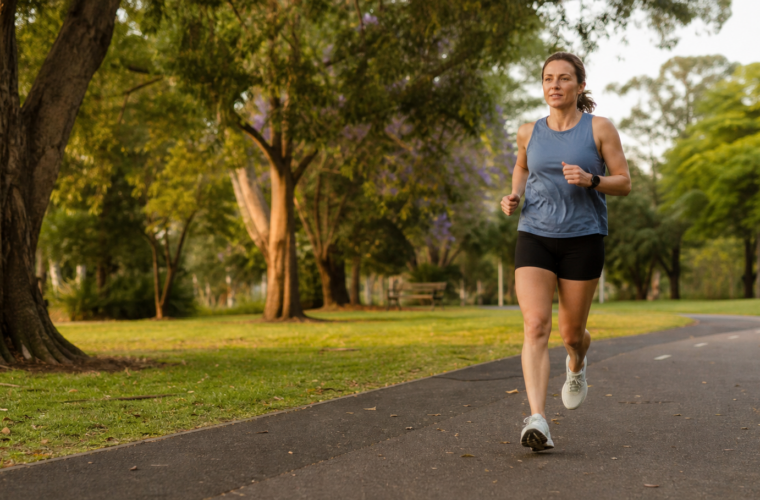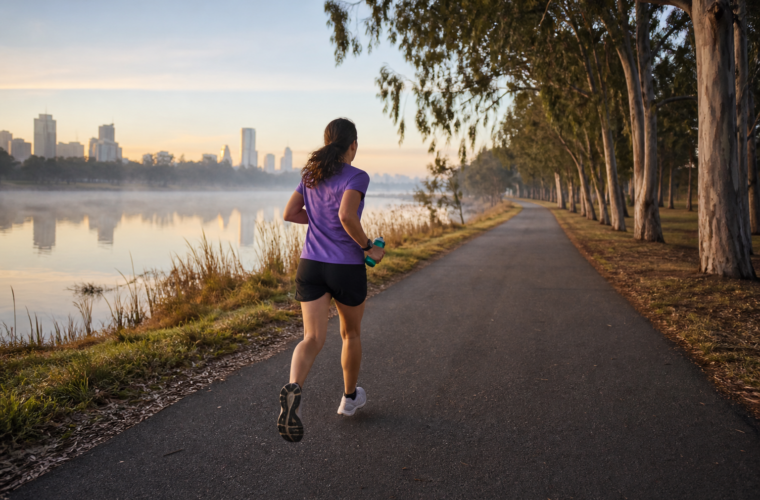

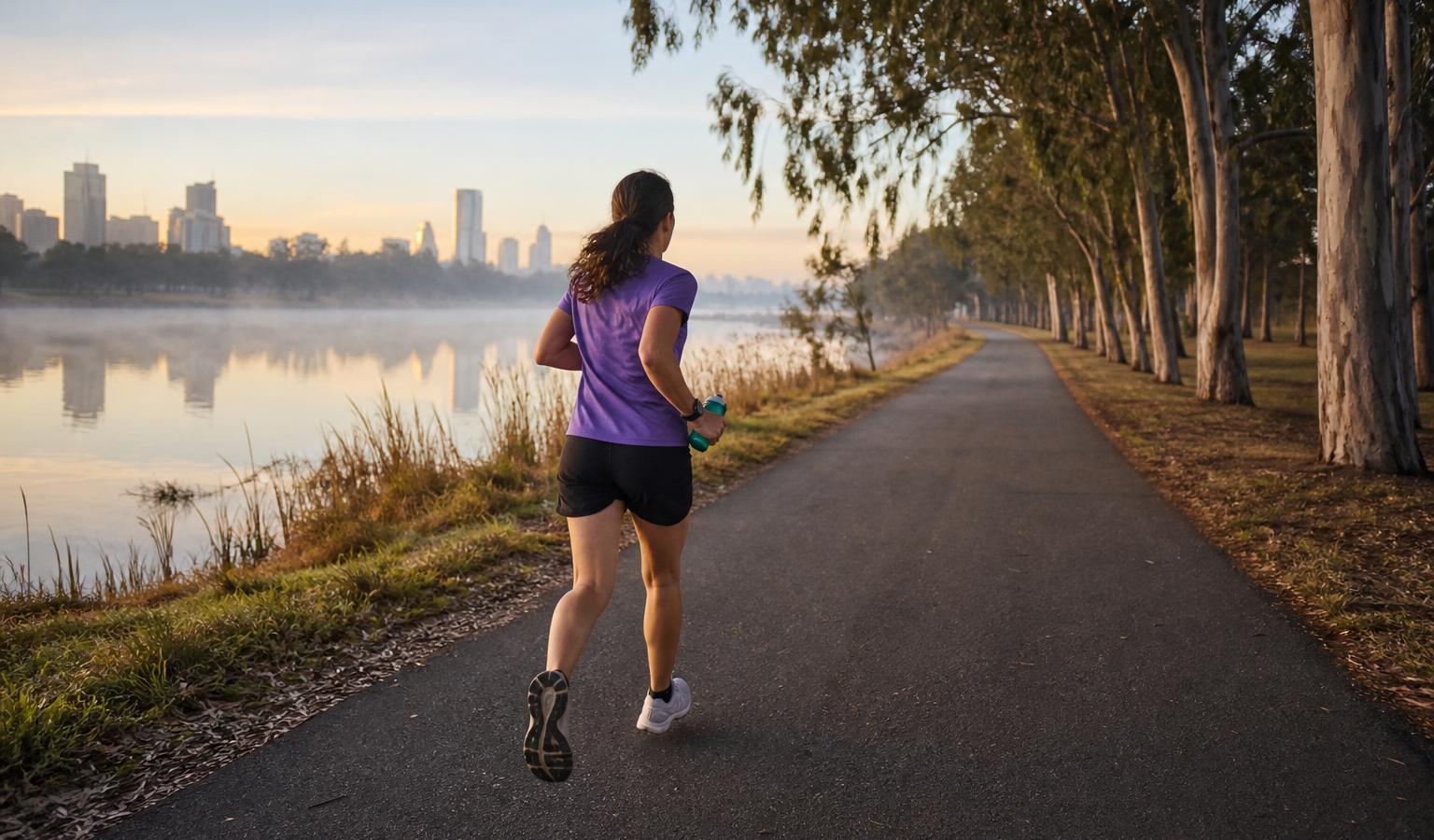
Illustration: original RunHQ / Charles R Summer artwork, reused from our first-marathon guide. This is an editorial illustration, not a photograph of the Burnie event.
Edward Marks won the 2026 Strait Link Burnie Ten in 28:15, while Georgie Grgec led the women in 31:21. The 25 October race added another chapter to Tasmania’s long-running road event, with national championship racing sharing the programme with community participation.
Race winners and national titles
The organiser’s honour board identifies Marks as the men’s winner and national champion. It names Grgec as the women’s winner, describes her performance as a course record and identifies runner-up Holly Campbell as the women’s national champion.
That distinction matters. Winning an open race and winning the Australian championship are separate achievements, governed by the event’s championship eligibility arrangements. Grgec should be credited with the race win; Campbell’s national title should also be stated explicitly. Calling both race winners the Australian champions would misrepresent the organiser’s account.
Readers looking beyond the winners should use the official results page, which links to the 2026 timing provider. It is the appropriate starting point for complete placings and category information. This report does not substitute an older edition’s podium for missing current-year data.
A championship field on the coast
The organiser’s pre-race release listed Sam Clifford, Isaac Heyne, Adam Goddard, Tim Vincent and Logan Janetzki among the men expected to compete. Its women’s field included Grgec, Campbell, Ruby Smee and Milly Clark, alongside the addition of middle-distance Olympian Linden Hall.
Hall’s inclusion offered an interesting contrast of backgrounds: a track specialist appearing in a road event with established distance runners. A preview’s entrant list, however, is not proof that every named athlete started or finished. Those questions belong to the final results, and should not be answered by copying pre-race expectations into a retrospective.
Local performances and a wider programme
The honour board names Clifford as the first Tasmanian man in 29:44 and Smee as the first Tasmanian woman in 33:41. They add a local thread to an event that also attracts athletes from beyond the state.
Burnie offered a 10km, a 5km and an 800m children’s dash. Before the event, the organiser reported 93 entered teams, including substantial local school representation. Those are entry figures from the build-up, rather than a verified count of finishers on race day.
The 2026 instructions placed the start and finish outside Burnie City Council Chambers at 80 Wilson Street. Retaining that detail in an event archive helps distinguish this edition’s arrangements from older guides. It should not be treated as confirmation of next year’s course or assembly point.
Reading the record correctly
A useful race archive keeps dates, distances and result categories together. Before comparing a time with a previous performance, check that both entries are from the same distance and that the displayed timing fields are comparable. A title in one competition and a placing in another can both be correct without referring to the same ranking.
For RunHQ readers, the lasting story is the combination of Marks’ win, Grgec’s standout time and Campbell’s championship distinction. Each deserves a clear place in the record. Further podium positions and any national-record classification should be checked against the relevant official result or ratification source before being added.
Explore more RunHQ race reporting and visit Running Watches Australia for researched equipment guides.
Sources: Burnie Ten honour board, organiser’s 23 October race-day release and official results index. Prepared from published sources; no firsthand attendance or athlete interview is claimed.