
Desk-break mobility for runners can add gentle movement variety during long workdays. Long periods at a desk do not permanently “switch off” a runner’s muscles, but staying in one position can feel uncomfortable and make the first minutes of movement stiff. This seven-minute reset adds gentle variety during the workday without turning a break into a workout.
Prepare the space
Close the laptop, move the chair out of the way and use a stable desk or wall for light support. Wear shoes if the floor is slippery. Keep every movement comfortable and avoid bouncing or forcing range.
Keep regular water within reach at your workspace with reusable bottle options from Mizu Australia.
Desk-break mobility for runners: the seven-minute sequence
1. Easy marching
March gently beside the desk for 45 seconds. Keep steps quiet and breathe normally. This is simply a transition from sitting to moving.
2. Supported hip-flexor shift
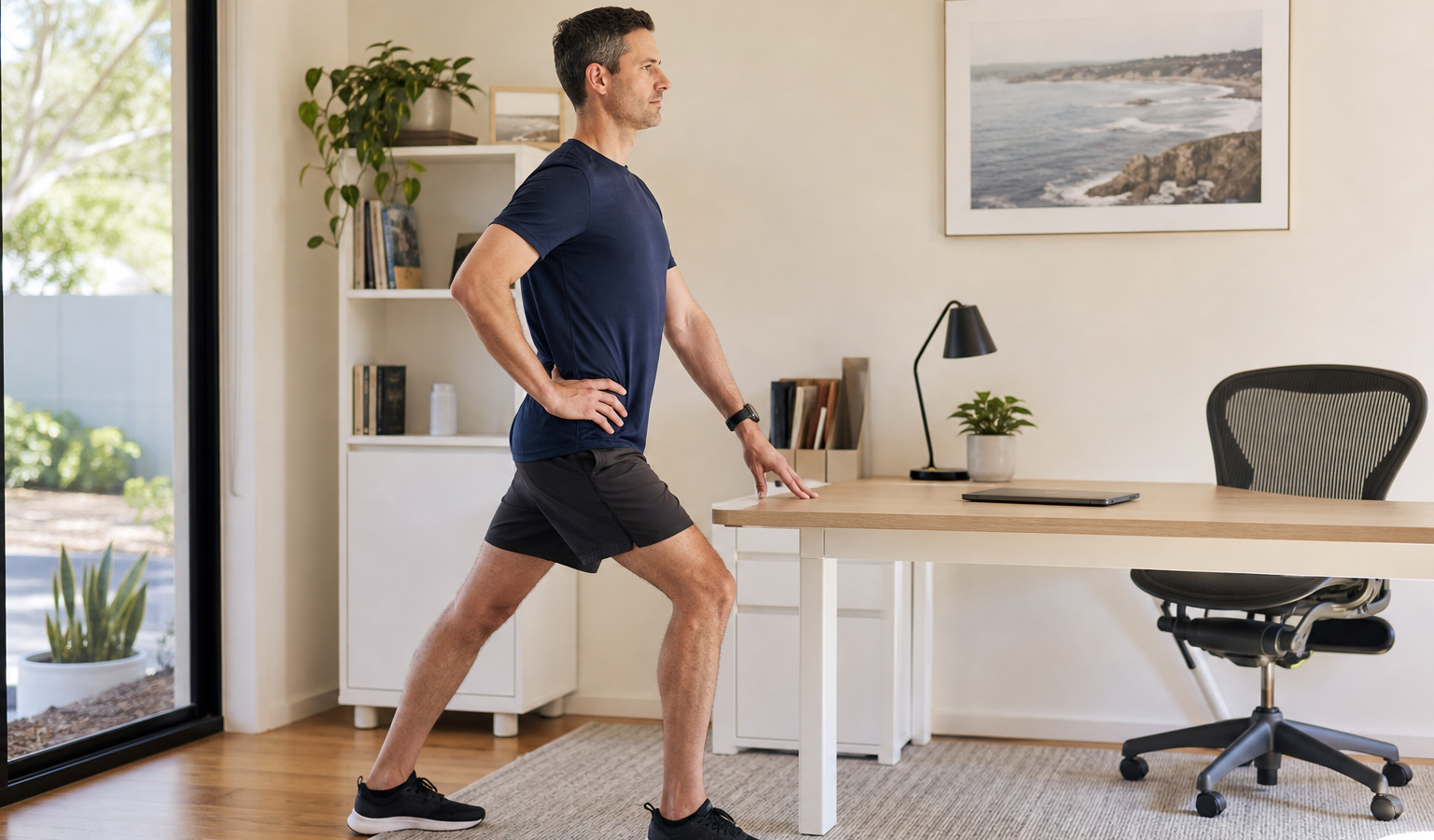
Step one foot back, keep the rear heel lifted and bend the front knee slightly. Shift the pelvis forward a small distance without arching the lower back. Repeat six times, then change sides.
3. Ankle rocks
Place one foot forward with the heel down and guide the knee toward the toes, then return. Complete eight repetitions each side. Keep the knee tracking comfortably over the middle toes.
4. Desk-supported hinge
Rest both hands on the desk, step back and hinge at the hips until the trunk is comfortable. Keep knees soft and the spine long. Return upright and repeat six times.
5. Standing trunk rotation
Cross the arms loosely over the chest and rotate a small distance from side to side while the hips remain mostly forward. Complete six slow repetitions each way without forcing the neck.
6. Calf raises
Hold the desk lightly, rise onto the balls of both feet and lower under control. Complete ten repetitions. Use a smaller range if calves are tired from training.
7. Shoulder-blade glide
With arms by the sides, gently draw the shoulder blades back and release them without shrugging. Complete eight repetitions, then finish with two relaxed breaths.
Review watches with movement prompts and training-load features at Running Watches Australia. Prompts can help routine, but they do not diagnose mobility or health.
How often?
Use the reset once or twice during a long sitting period, or choose only two movements when time is limited. The aim is position change, not perfect compliance with an hourly alert. Walking to refill water or taking stairs may provide equally useful variety.
After an easy run, RunHQ’s post-run mobility routine offers a longer option. Use the rescheduling guide if work pressure affects a planned session.
Before running after work
A desk break does not replace a run warm-up. Begin the run with easy walking or jogging and build effort gradually. If sitting discomfort becomes sharp pain, weakness, numbness or changes your gait, seek individual assessment rather than stretching harder.
Conclusion
This seven-minute reset is a practical way to break up sitting: march, move the hips and ankles, hinge, rotate and raise the heels. Keep it gentle enough that you return to work refreshed rather than fatigued.
Sources and image credit
- Australian Government movement recommendations for adults
- Better Health Channel: exercise safety
- Image: original AI-assisted RunHQ editorial artwork. © RunHQ / Charles R Summer.
Related reading: Desk-Break Mobility for Runners: A Practical Eight-Minute Reset.