
Pre-run hydration does not need to begin with a complicated formula. For most recreational runners, the useful starting point is arriving at training normally hydrated, carrying fluid when conditions or duration justify it, and avoiding the assumption that more water is always better.
Needs vary with weather, pace, body size, clothing, acclimatisation and individual sweat rate. A short easy run in cool conditions may require no drink during the session, while a longer outing in summer may need a deliberate plan. This checklist helps runners make that decision without presenting one universal volume.
[adinserter block=”1″]Pre-run hydration before leaving home
- Check the forecast, including temperature, humidity and expected exposure.
- Notice ordinary hydration signals such as thirst and urine colour without treating either as a medical test.
- Drink normally with meals rather than forcing a large volume immediately before running.
- Choose a familiar route with fountains or refill points when practical.
- For longer sessions, decide whether a handheld bottle, waist belt or vest is comfortable.
People often focus on what to drink during a run while overlooking the preceding day. Regular meals, normal drinking and adequate sleep generally provide a more stable starting point than trying to correct everything in the final hour.
A simple pre-run hydration check is to consider the session length, forecast, route access to water and what has worked comfortably in similar conditions. Record useful observations after key long runs so the next plan is based on personal experience rather than guesswork. Event-day drinking should be practised during training, not introduced for the first time on race morning. This keeps the plan practical while recognising that individual needs and environmental conditions can change.
During the run
Use thirst, conditions and prior experience as practical guides. Do not force fluid far beyond comfort. Excessive intake can be dangerous, particularly during long events, so a runner should not aim to gain body weight through drinking during exercise.
For sessions lasting well beyond an hour, fluid planning may need to sit alongside carbohydrate and sodium considerations. That becomes increasingly individual and is a good reason to seek advice from an accredited sports dietitian, especially for marathon preparation or runners with medical conditions.
[adinserter block=”1″]After finishing
Resume normal drinking and eat a balanced meal or snack. A runner facing another demanding session soon may benefit from a more structured recovery plan, while someone with a full recovery day can usually take a steadier approach. Persistent dizziness, vomiting, confusion or severe headache should not be dismissed as ordinary post-run fatigue.
Bottles and practical equipment
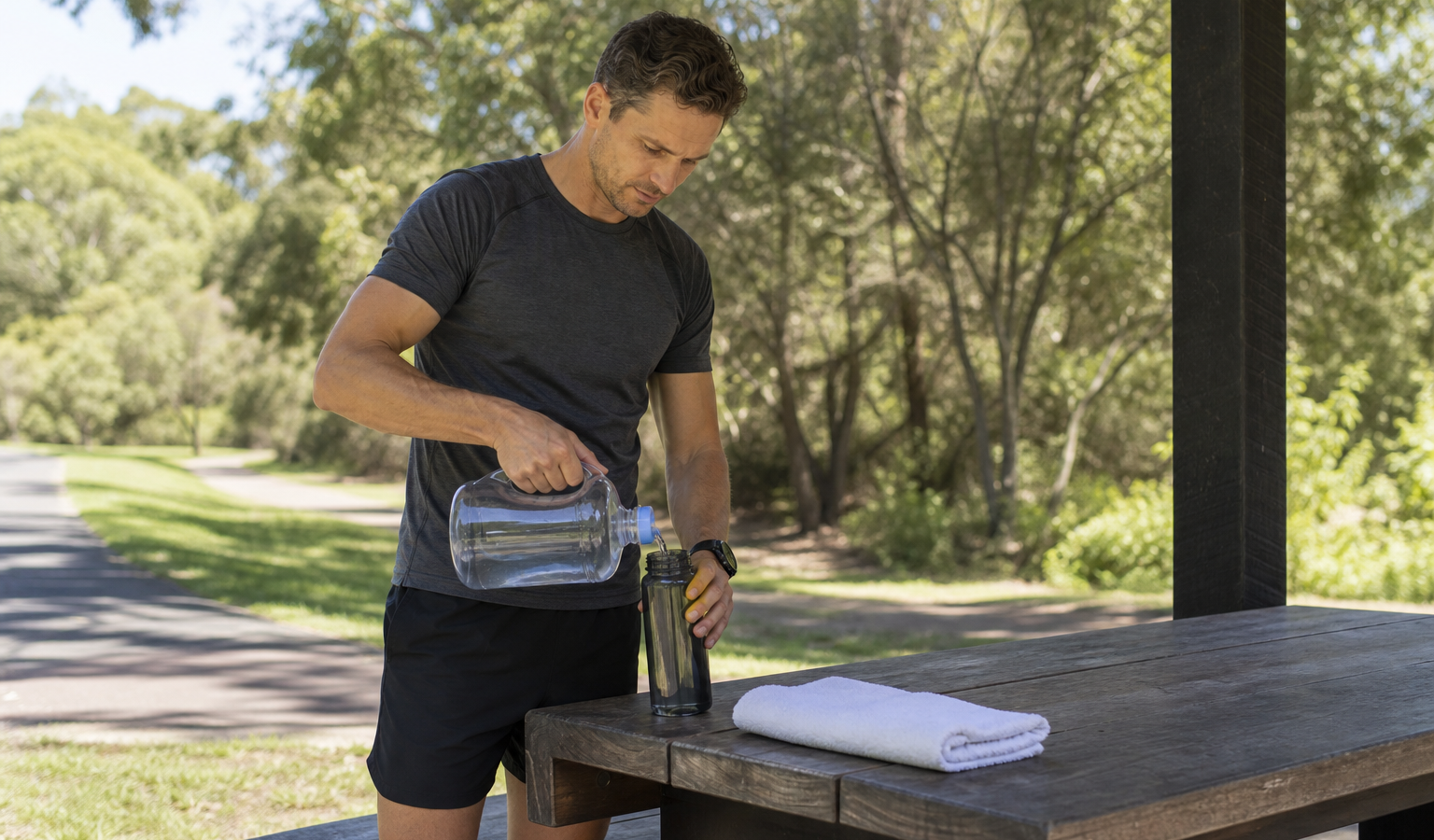
A reusable bottle should be easy to clean, comfortable to carry and appropriately sized for the route. Runners interested in insulated stainless-steel options can review the range at Mizu. Product selection is personal; carrying the largest available bottle is not automatically the safest strategy.
Running-watch alerts can remind runners to check thirst or practise an event plan without dictating a fixed intake. Visit Running Watches Australia for watch guidance, and browse RunHQ’s training library and events calendar.
Sources and product reference
- Sports Dietitians Australia: fluids in sport
- Australian Institute of Sport nutrition resources
- Mizu official site
Health and safety notice
This article provides general information only and is not personalised medical, health, nutrition or exercise advice. New or returning runners, pregnant readers, people taking medication, and anyone with a health condition or injury should consult an appropriately qualified health professional, accredited sports dietitian or accredited exercise professional before changing hydration or training. Stop exercising and seek prompt professional help for chest pain, fainting, confusion, severe or unusual breathlessness, repeated vomiting, sudden weakness or other concerning symptoms.
Planned featured image: existing original RunHQ artwork titled “Pre-run hydration planning”, with its existing media-library credit and provenance.
Related reading: Long-Run Route Planning: A Safe Three-Point Checklist.