
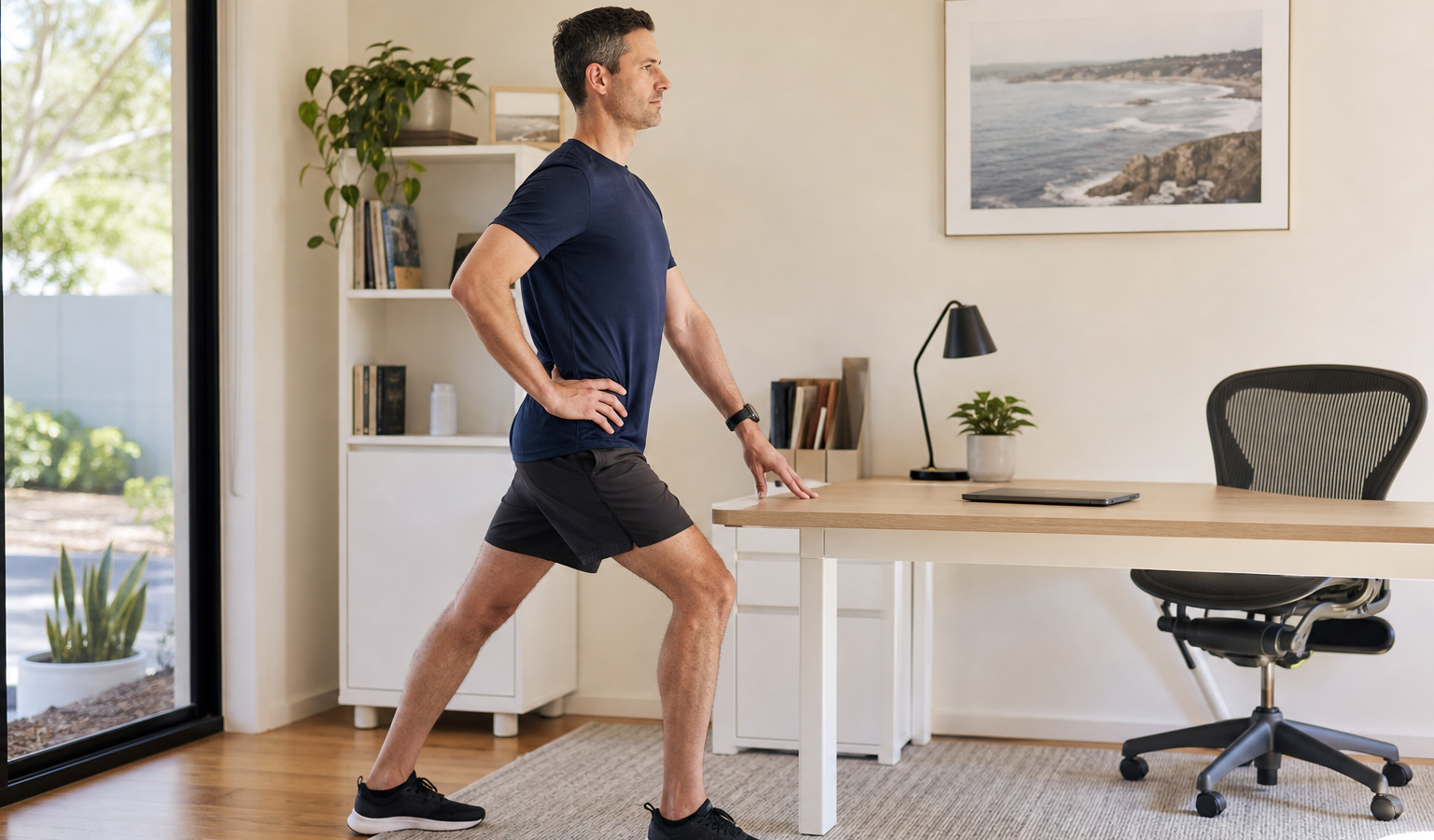
Desk-break mobility for runners is not a substitute for training, but it can interrupt a long period of sitting and provide a comfortable transition into the next part of the day. This eight-minute routine uses a stable chair or desk and focuses on gentle movement for the ankles, hips, upper back and shoulders.
The purpose is to change position, not chase maximum flexibility. Use a range that feels controlled, keep breathing normally and avoid forcing a stiff area. Office clothing, available space and privacy will influence which movements are practical, so treat the sequence as a menu rather than a test.
[adinserter block=”1″]desk-break mobility for runners: The eight-minute desk-break routine
| Movement | Time | Practical cue |
|---|---|---|
| Easy walk | 1 minute | Walk to refill water or make a short circuit of the room. |
| Supported ankle rocks | 1 minute | Keep the heel comfortable and use the desk for balance. |
| Sit-to-stand | 1 minute | Use hand support and a higher chair when needed. |
| Standing hip extension | 1 minute | Move one leg slightly behind without arching the back. |
| Desk-supported trunk rotation | 1 minute | Rotate gently and keep the movement pain-free. |
| Wall or desk shoulder slides | 1 minute | Use a comfortable range without shrugging. |
| Calm standing breaths | 1 minute | Let the shoulders settle while both feet stay grounded. |
| Easy walk | 1 minute | Finish by walking before returning to the chair. |
Use support to make movement reliable
A desk, wall or stable chair can reduce balance demands and help keep the movement small. Avoid wheeled chairs unless they are securely locked and designed to remain stable. If footwear restricts ankle movement or the floor is slippery, keep both feet down and choose walking or seated movements instead.
Sit-to-stand height matters. A higher seat generally requires less knee and hip range. Move forward on the chair, place the feet comfortably and stand without rushing. If a movement produces sharp pain, tingling, dizziness or instability, stop rather than trying to stretch through it.
[adinserter block=”1″]How often should runners take a break?
There is no single interval that fits every workplace or person. A practical approach is to connect brief movement with an existing cue: the end of a meeting, a drink refill, lunch, or the completion of a focused work block. Even standing and walking for a short period changes the position maintained at the desk.
On running days, keep the desk routine easy enough that it does not create fatigue. It can precede an evening run, but it does not replace a gradual running warm-up. After a hard morning session, choose especially gentle movements and prioritise food, hydration and recovery.
Planning and useful equipment
A watch or calendar reminder can help runners remember breaks, but alerts should support rather than interrupt essential work. Compare activity-alert and training features at Running Watches Australia. RunHQ’s training library and events calendar provide further planning resources.
A reusable bottle can also provide a natural reason to stand and walk. Readers exploring bottle options can visit the Mizu official site. Individual fluid needs vary, and drinking excessively is not beneficial; use thirst, conditions and qualified guidance appropriately.
Conclusion
An eight-minute desk break can be simple: walk, move the ankles and hips, gently rotate the upper body and finish on both feet. Use stable support, stay within a comfortable range and repeat the routine only when it leaves you feeling better prepared for the rest of the day.
Sources and product reference
- Australian Government physical activity recommendations
- Sports Medicine Australia running fact sheet
- Mizu official site
Health and safety notice
This article provides general information only and is not personalised medical, health, nutrition or exercise advice. New or returning runners, pregnant readers, people taking medication, and anyone with a health condition or injury should consult an appropriately qualified health professional or accredited exercise professional before starting or changing training. Stop exercising and seek prompt professional help if you experience chest pain, fainting, severe or unusual breathlessness, sudden weakness, confusion, numbness or any other concerning symptoms.
Featured image: original RunHQ editorial artwork titled “Desk-break mobility for runners”, used from the site media library with its recorded provenance.
Related reading: Desk-Break Mobility for Runners: A Seven-Minute Reset.