
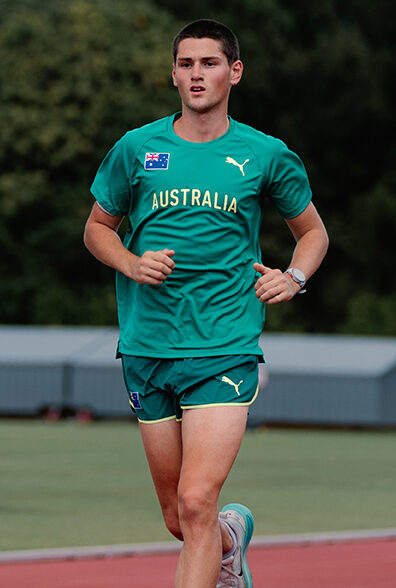
Quick answer: Cameron Myers won the men’s 1500m at the 2026 Diamond League Final in Brussels in 3:30.14, becoming only the eighth Australian to claim a Diamond League Final title.
Australian middle-distance running has another landmark result to celebrate. On 5 September 2026, Cameron Myers won the men’s 1500m at the Diamond League Final in Brussels, a result recorded in reports from Australian Athletics, World Athletics and the ABC.
The winning time was 3:30.14. Official reporting places Myers ahead of the field in the final, with the performance adding a major senior title to the international résumé he has built through the 2026 season. This report uses the published result and does not infer splits, prize money or attendance beyond what the source material states.
Cameron Myers: Why the result matters
The Diamond League Final is the championship meeting for the series, so a victory there is a significant marker in an athlete’s season. Australian Athletics described Myers’ win as a breakthrough for the country on the opening night. World Athletics’ meeting report independently records the 1500m result, while ABC’s Australian coverage provides additional context for local readers. Taken together, those direct sources support the result, the date and the 3:30.14 winning time.
For runners following the event, the most useful lesson is the value of patience over 1500m. A championship final rewards athletes who can stay composed through the early laps, protect position and use their speed when the race opens. Recreational runners should not copy elite pacing or training loads; the practical takeaway is to build consistency, leave room for a controlled finish and keep hard sessions separated by easy running and recovery.
Myers’ performance also gives Australian clubs a timely example of how middle-distance skills transfer across the season. Speed, aerobic strength and race awareness are developed progressively. A simple club session might pair short, relaxed strides with a controlled interval set, but volume and intensity should be adjusted to the runner’s experience, current health and coaching advice.
Run HQ will continue to distinguish verified race results from commentary. We have not added claims about spectators, start lists or future selection decisions unless an official source confirms them. Readers can follow the full meeting information through the linked World Athletics report and Australian coverage.
For training, mobility and gear planning between races, explore the Run HQ training desk and our practical running watch reviews and comparisons.
Sources checked 7 September 2026 (Australia/Sydney): Australian Athletics, World Athletics and ABC News. Published by Charles R Summer.
[adinserter block=”1″]
For Australian athletes and coaches, the result is also a reminder that championship racing is its own skill. The final is run on a global stage, where positioning, tactical decisions and a late change of pace can matter as much as raw fitness. Myers’ win should be read as a documented result, not as a promise that every junior runner will follow the same path. Development remains individual: a coach may use drills, relaxed strides, threshold work or race simulations, but each session should be balanced with easy days and adequate sleep. Recreational runners can celebrate the performance, then return to their own plan, keeping intensity appropriate and seeking qualified advice for persistent pain, illness or a sudden change in training tolerance. The official reports linked above are the reference for the winning time and championship context.
Related reading: Cameron Myers Claims Superb Commonwealth Games Mile Silver.