
A runner strength microdose is a small, repeatable dose of resistance work that fits around real training. Instead of treating strength as a separate project, use two focused sessions of 20 to 25 minutes each week. The goal is not to chase exhaustion; it is to reinforce the calf, hip, trunk and upper-body control that helps you keep an even stride when a run gets longer or faster.
runner strength microdose: Why short sessions can work
Australian movement guidance encourages adults to include muscle-strengthening activity across the week. Sports Medicine Australia also recommends adjusting running when pain, illness or unusual fatigue appears. A microdose respects those principles by keeping the workload modest and leaving room for running, sleep and ordinary life. It is general information, not a prescription, and it should be scaled to your experience.
Place the first session after an easy run or on a separate low-load day. Put the second at least 48 hours later, ideally after another easy day. Keep one or two repetitions in reserve on every set. The session should make you feel organised and capable, not depleted for your next quality run.
[adinserter block=”1″]Session A: lower leg and single-leg control
Start with two sets of 8 to 12 slow calf raises, using a wall for balance. Pause at the top and lower for a count of three. Follow with two sets of 6 to 10 supported split squats per side. Keep the front foot planted and let the knee track in line with the second toe. Finish with two sets of 8 hip hinges per side, reaching the free leg back while the spine stays long. Rest as needed; smooth movement matters more than speed.
For a simple progression, add one repetition to each set before adding load. A backpack with a small, stable weight can provide resistance, but bodyweight is enough to learn control. If your heel, knee or hip feels sharp pain, stop the exercise and seek qualified advice rather than changing your stride to push through.
Session B: trunk, back and posture
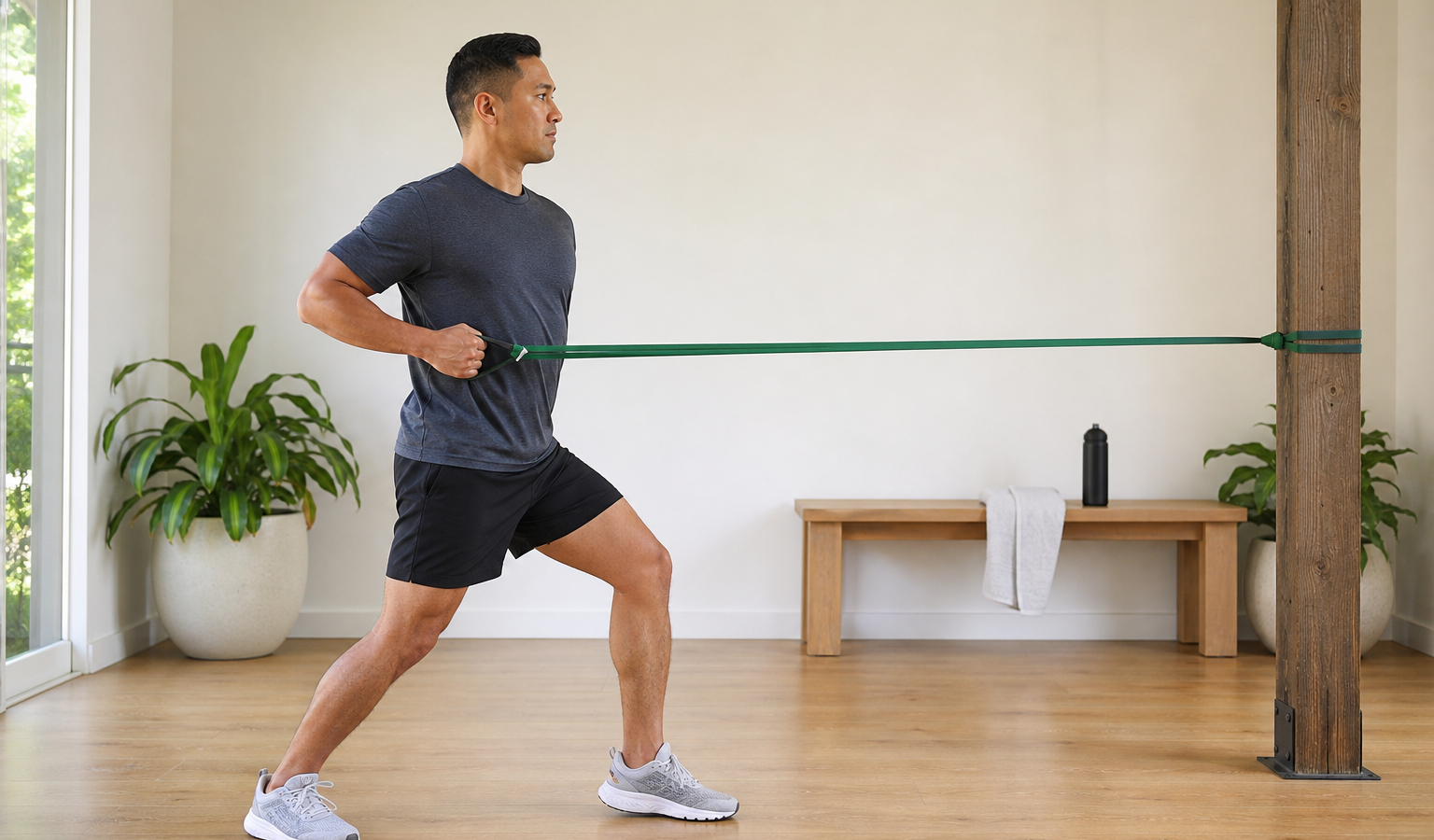
Begin with two sets of 20 to 30 seconds of a side plank from the knees or feet. Keep the ribs stacked over the pelvis and breathe normally. Add two sets of 8 to 12 incline push-ups against a bench or kitchen counter, then two sets of 8 to 12 band rows or a controlled towel row. The final movement is a dead-bug variation: two sets of 6 slow repetitions per side, moving only as far as you can keep the lower back comfortable.
These exercises are deliberately unglamorous. Their value is consistency: a stable trunk gives the arms and legs a quiet platform, while stronger upper-back muscles can help you hold relaxed posture late in a run. Stop a set when technique changes, and reduce the range of motion before reducing your breathing quality.
[adinserter block=”1″]Fit the microdose around a progressive week
Keep strength away from your hardest running. If Tuesday is a controlled interval day, place Session A after Monday’s easy run and Session B on Friday after a short recovery jog. A progressive 5K or 10K plan still needs easy days and a gradual increase in total work; strength should support that pattern, not compete with it. Use the RunHQ progressive distance guide as a framework and adjust it to your current capacity.
How to know the dose is right
Record how your legs feel the next morning, not just how many repetitions you completed. Mild, familiar muscle effort can be normal; escalating joint pain, altered gait, numbness, dizziness or unusual breathlessness are reasons to stop and obtain professional help. Keep the next run easy if fatigue lingers. A watch can show training trends, while runningwatches.com.au offers device comparisons, but no device can diagnose readiness or injury.
Sources and safety
Use the Australian Government adult movement guidelines and Sports Medicine Australia running resources for general context. This article provides general information only and is not personalised medical, health, nutrition or exercise advice. New or returning runners, pregnant readers, people taking medication, and anyone with a health condition or injury should consult an appropriately qualified health professional or accredited exercise professional before starting or changing training. Stop exercising and seek prompt professional help if you experience chest pain, fainting, severe or unusual breathlessness, sudden weakness, confusion, numbness or any other concerning symptoms.
Featured image: original RunHQ editorial artwork titled Upper-body and trunk strength for runners; provenance recorded in the media library.
Related reading: Runner Strength Micro-Session: A Controlled 20-Minute Routine.