
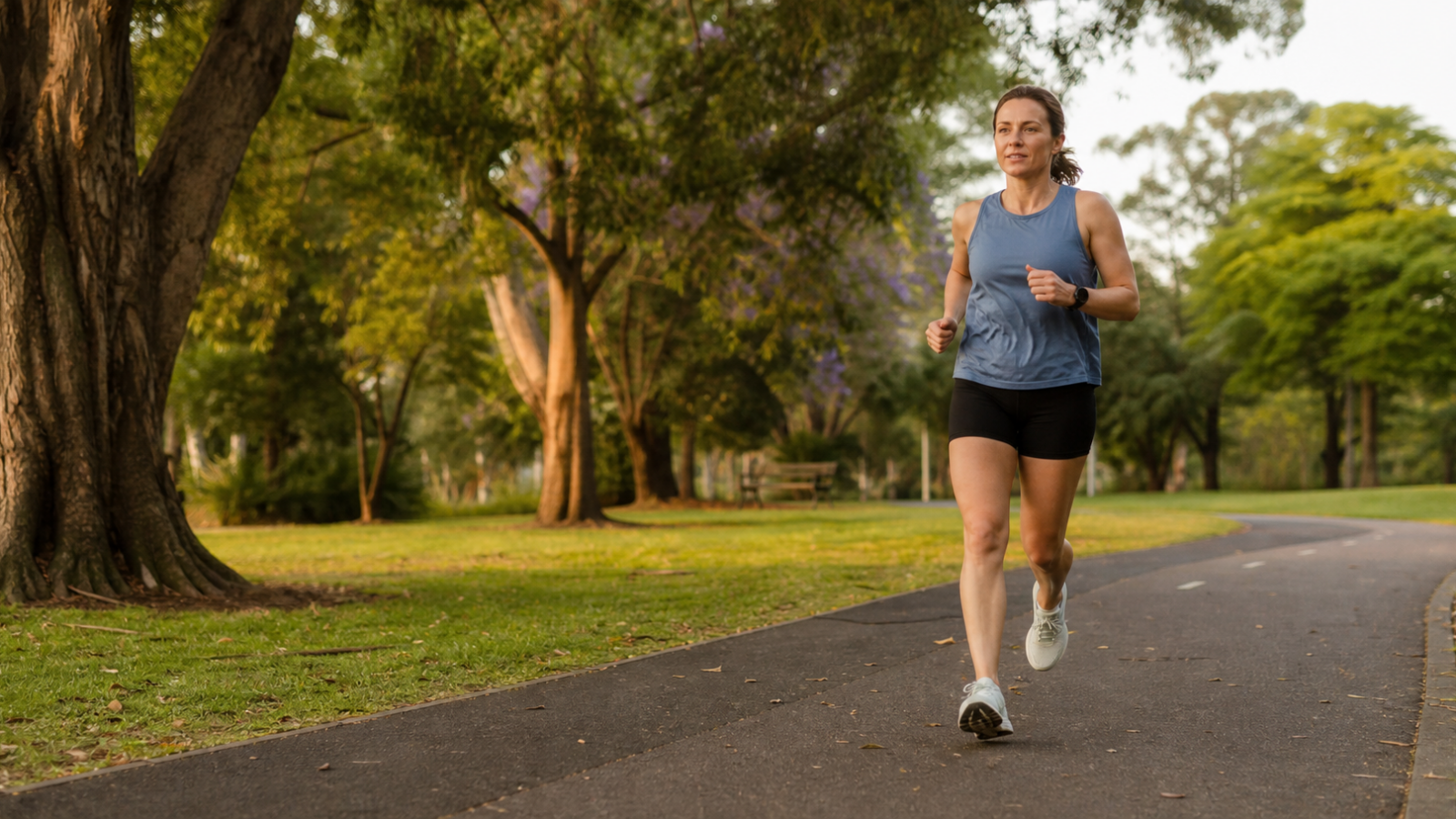
Progressive 10K build is best approached as a gradual extension of a distance you already control. This six-week bridge assumes you can complete a comfortable 5K, with walk breaks if needed. The aim is to add time on feet without turning every session into a test. Keep easy running conversational, and treat the schedule as a framework that can be adjusted around work, sleep and health.
Before starting, check that your shoes are comfortable and that you can train consistently. The Australian Government movement guidelines encourage regular activity across the week, while Sports Medicine Australia recommends responding to pain and fatigue rather than forcing a plan. This is general information, not a prescription.
[adinserter block=”1″]
progressive 10K build: Weeks 1 and 2: make 5K routine
Run three times on non-consecutive days. Session one is 25 to 30 minutes easy. Session two alternates five minutes easy running with one minute walking for 30 minutes. Session three is a relaxed 5K, stopping at a planned walk break if breathing becomes strained. Add one short strength session using calf raises, a hip hinge, a sit-to-stand and a side plank. Two rest days should be genuinely easy; a gentle walk is enough.
In week two, add five minutes to the first session and keep the other two similar. If soreness changes your stride, repeat the week rather than adding distance. Note how you slept and how your legs felt six hours after each run. Those observations are more useful than a single watch score.
Weeks 3 and 4: extend one outing
Keep the first run at 30 minutes easy. For the second, include four relaxed one-minute pick-ups with two minutes easy between them; they should feel controlled, not like sprints. Make the long outing 6.5K in week three and 7.5K in week four, using a run-walk pattern whenever it keeps the effort even. A short mobility routine after sitting can help you feel ready for the next session.
Fuel and hydration can remain simple. Eat a familiar meal, drink to thirst and avoid experimenting before the longer outing. If the next meal is delayed, a snack containing carbohydrate and protein can be practical. Sports Dietitians Australia has athlete-focused resources for runners who need individual advice.
[adinserter block=”1″]
Weeks 5 and 6: practise the 10K rhythm
In week five, run 35 minutes easy, then 30 minutes with three five-minute blocks at a steady effort separated by two minutes easy. Extend the long outing to 8.5K. Week six reduces the first two runs to 25 and 20 minutes, leaving fresh legs for a 10K attempt at the weekend. Start slower than you think you need, settle into a repeatable rhythm and use a planned walk break before fatigue becomes a problem.
After the attempt, walk for several minutes, eat normally and schedule at least one low-load day. A watch estimate can describe a trend, but it cannot diagnose injury or readiness. Running Watches Australia reviews workload and recovery features for runners who want to compare devices; use those tools alongside your own notes.
When to adjust
Swap a run for an easy walk if illness, unusual fatigue or persistent pain appears. Stop and seek qualified help for chest pain, fainting, severe breathlessness, sudden weakness or other concerning symptoms. RunHQ’s training library and events calendar can help you place the 10K in a realistic week.
Sources
- Australian Government adult movement recommendations
- Sports Medicine Australia running resources
- Sports Dietitians Australia
Health and safety notice
This article provides general information only and is not personalised medical, health, nutrition or exercise advice. New or returning runners, pregnant readers, people taking medication, and anyone with a health condition or injury should consult an appropriately qualified health professional or accredited exercise professional before starting or changing training. Stop exercising and seek prompt professional help if you experience chest pain, fainting, severe or unusual breathlessness, sudden weakness, confusion, numbness or any other concerning symptoms.
Featured image: original RunHQ editorial artwork titled “Progressive 10K build”, with provenance recorded in the media library.