
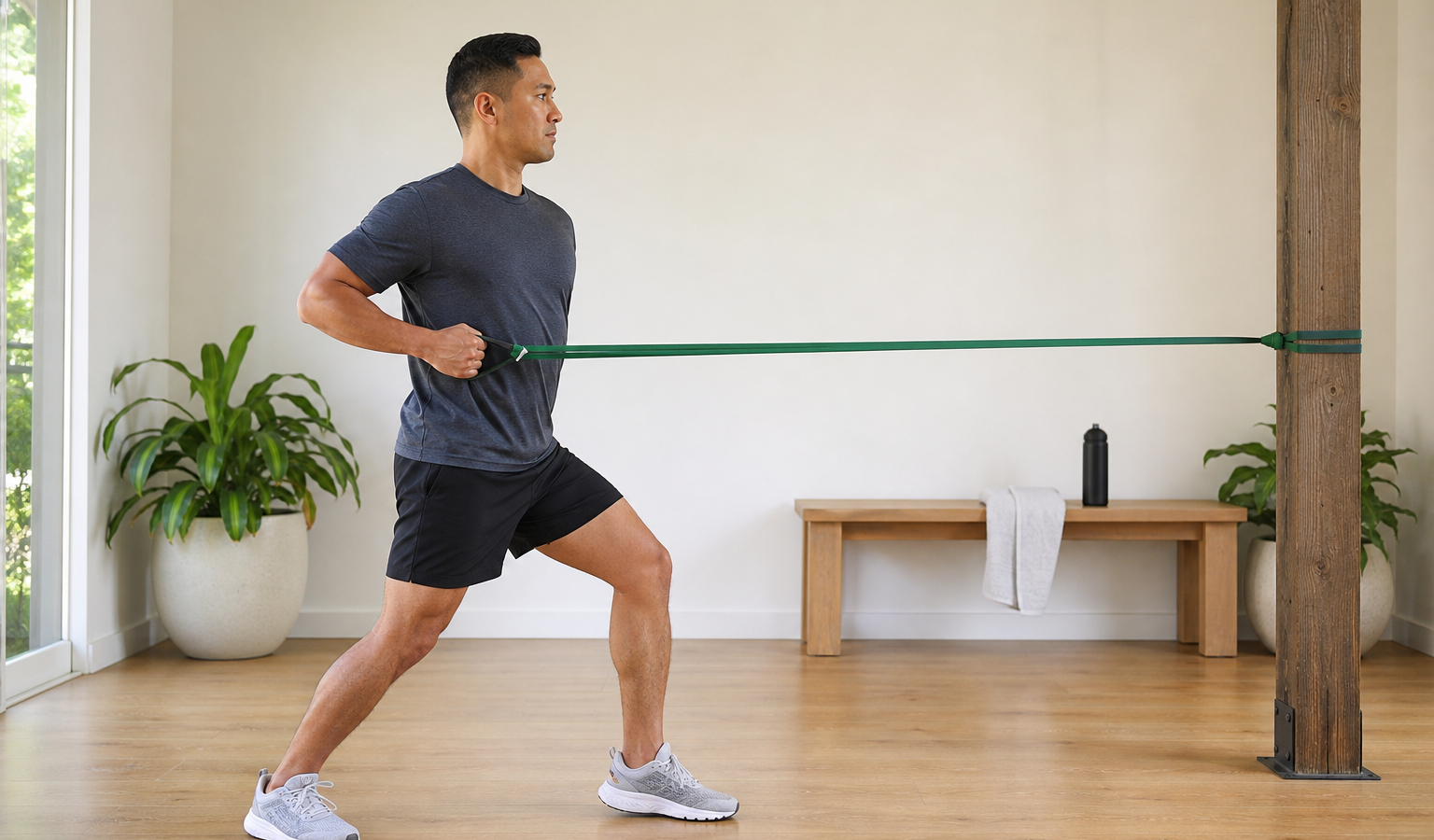
A short strength session can support running when it is placed carefully inside the week. This 20-minute runner strength micro-session uses controlled movements for calves, hips, trunk and upper body, with options to reduce range or load. It is a training template, not a medical prescription, and it assumes you are free from acute injury and comfortable with basic bodyweight exercise.
Use the session after an easy run or as a standalone workout on a non-consecutive day. Keep two or three repetitions in reserve on every set. The goal is repeatable practice rather than fatigue that changes your running mechanics.
runner strength micro-session: Warm up and choose the right load
Start with five minutes of brisk walking, easy jogging or cycling. Add ankle circles, hip hinges and arm swings. If a joint feels sharp, unstable or unusually restricted, stop and choose a gentle walk or seek qualified advice. A resistance band or light dumbbell is optional; bodyweight is enough to learn the positions.
Calf and foot control
Complete two sets of 10 to 15 slow calf raises, pausing briefly at the top and lowering for a count of three. Hold a wall for balance. Progress by using one leg only when both sides move smoothly and you can keep the heel tracking straight. Follow with 20 to 30 seconds of quiet single-leg balance on each side. Keep the tripod of big toe, little toe and heel connected to the ground.
Hip hinge and split stance
Perform two sets of eight hip hinges. Push the hips back, keep the spine long and finish by squeezing the glutes without leaning backwards. Then use a supported split squat for two sets of six to eight each side. Lower only as far as you can keep the front knee tracking over the middle toes. A shorter range or a higher chair makes the exercise more accessible.
Trunk and upper-body stability
Choose a side plank from the knees or feet for two holds of 15 to 25 seconds per side. Breathe normally and keep the ribs stacked over the pelvis. Add two sets of eight to 12 incline push-ups against a bench or wall. These movements are not a test of maximum strength; they are a low-cost way to practise bracing and shoulder control that can help you feel organised when you run.
Progress across four weeks
Repeat the same session twice in week one and note how you feel the following morning. In week two, add one or two repetitions to the calf raises and split squats. In week three, add a third set only to one exercise that feels easy. Week four is a consolidation week: keep the sets steady and make every repetition deliberate. Increase load only when the final repetition looks like the first.
Place the session away from a hard interval or long-run day. If your legs feel heavy, reduce the volume or move the strength work after an easy day. Sleep, work stress, heat and hills all influence how a familiar load feels. A watch can track training load, but it cannot diagnose a tendon or decide whether pain is safe to ignore.
When to stop and seek help
Stop if pain changes your movement, becomes sharp or radiates. Seek prompt professional help for chest pain, fainting, severe breathlessness, sudden weakness, confusion or numbness. Persistent pain, swelling or loss of function deserves assessment by a qualified health professional or accredited exercise professional.
Related resources
RunHQ’s progressive 10K plan shows how distance can build gradually. Running Watches Australia’s GPS watch comparison explains workload features; use device data alongside your own notes.
Sources
- Sports Medicine Australia running resources
- Australian Institute of Sport
- Australian Government adult movement recommendations
Health and safety notice
This article provides general information only and is not personalised medical, health, nutrition or exercise advice. New or returning runners, pregnant readers, people taking medication, and anyone with a health condition or injury should consult an appropriately qualified health professional or accredited exercise professional before starting or changing training. Stop exercising and seek prompt professional help if you experience chest pain, fainting, severe or unusual breathlessness, sudden weakness, confusion, numbness or any other concerning symptoms.
Image credit and provenance: Original RunHQ editorial artwork selected from the media library; illustrative training scene, not a photograph of a specific athlete.
Related reading: Runner Strength Microdose: Two Short Sessions for a Stronger Week.