
Single-leg strength reset sessions give runners a short, controlled way to practise balance and force production without chasing exhaustion. The routine uses supported split squats, calf raises and hip hinges, with an emphasis on steady alignment. Keep every repetition smooth and stop while technique is still reliable. It can sit after an easy run or on a separate strength day when the legs feel fresh.
Use a wall or sturdy bench for support and move slowly. Australian Government movement guidance places strength work within a balanced weekly routine, and Sports Medicine Australia advises progression that respects pain and fatigue. The routine is general information, not a substitute for an individual rehabilitation plan.
[adinserter block=”1″]
Minutes 0–3: prepare the stance
Stand tall and take five slow weight shifts from both feet to one foot on each side. Then complete five supported quarter-squats per leg. Keep the knee tracking in line with the second and third toes. The range should feel comfortable; a smaller movement with control is more useful than a deep movement with the pelvis twisting.
Minutes 3–7: split-stance control
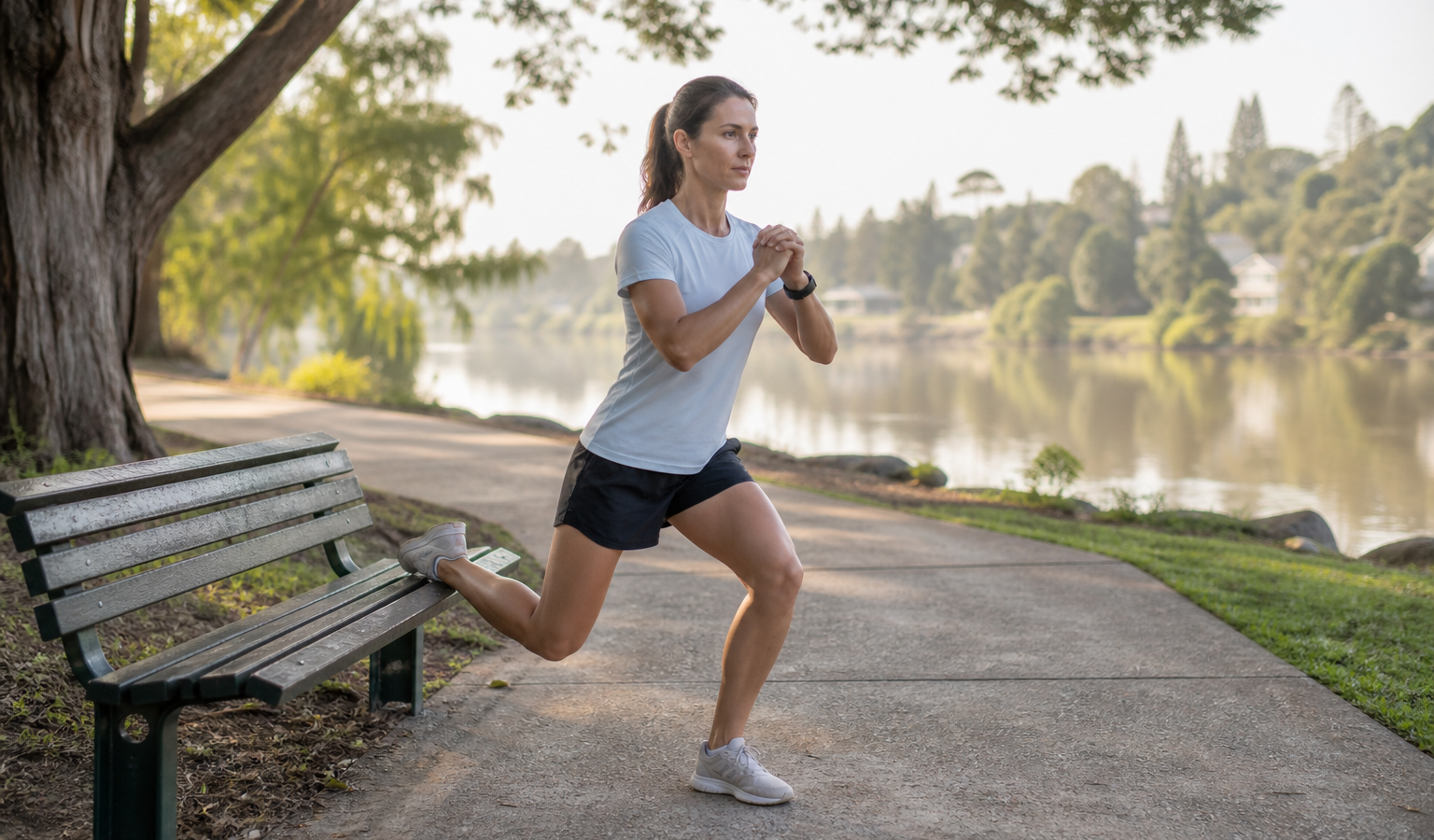
Step one foot back into a short split stance. Hold the support lightly, lower for a count of three and rise for a count of two. Complete two sets of six per side. Keep the front heel grounded and the ribs stacked over the pelvis. Rest by walking for 30 seconds between sides.
[adinserter block=”1″]
Minutes 7–10: calf and hip hinge
Complete two sets of eight single-leg calf raises per side, using the wall for balance. Follow with six hip hinges per side: soften the standing knee, send the hips back and return without rounding the spine. Stop before the calf or hamstring becomes cramped. If balance is difficult, keep the toes of the free foot lightly touching the floor.
Minutes 10–12: review and progress
Walk for two minutes and compare sides. Note whether one side felt less stable, but do not add load to “fix” a single session. Progress by adding one repetition per set next week, not by rushing the movement. Keep at least a day between this routine and a demanding hill or interval workout. A GPS watch can help you review training load; compare practical models at runningwatches.com.au.
RunHQ’s training library includes progressive 5K and 10K ideas, and the events calendar can help you schedule strength around races.
Sources and health notice
- Australian Government adult physical-activity recommendations
- Sports Medicine Australia running resources
This article provides general information only and is not personalised medical, health, nutrition or exercise advice. New or returning runners, pregnant readers, people taking medication, and anyone with a health condition or injury should consult an appropriately qualified health professional or accredited exercise professional before starting or changing training. Stop exercising and seek prompt professional help if you experience chest pain, fainting, severe or unusual breathlessness, sudden weakness, confusion, numbness or any other concerning symptoms.
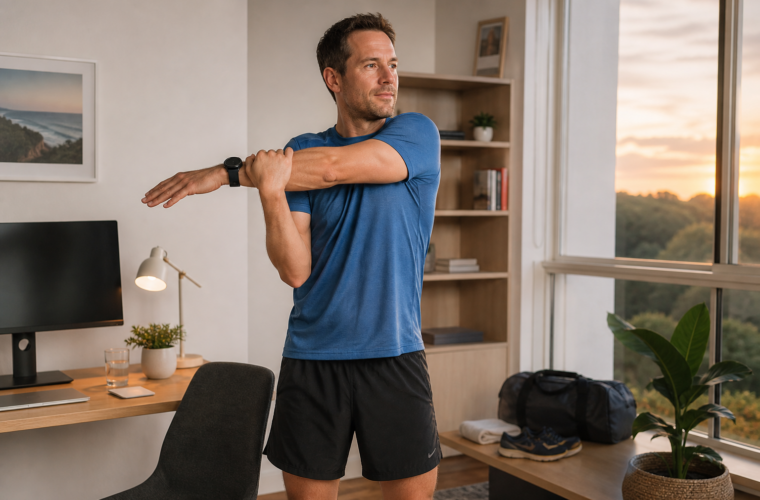
Featured image: original RunHQ editorial image created for this runner strength guide. © RunHQ / Charles R Summer; no third-party stock licence. Provenance is recorded in the WordPress media library.