
Breathing reset for runners: a six-minute downshift routine with a calm approach to winding down around your training.
A breathing reset gives runners a short bridge between training and the rest of the day. This six-minute downshift uses comfortable nasal or mixed breathing, gentle movement and a supported position. It is not a performance test and it cannot diagnose a breathing problem. The aim is simply to let effort settle before you drive, work or start another task.
breathing reset for runners: When to use it
Try the reset after an easy run, a strength session or a stressful commute. Walk for several minutes first so breathing has already begun to slow. If you are dizzy, wheezy, unusually short of breath or unwell, stop and seek appropriate help rather than trying to control the symptoms with a routine. Australian movement guidance is useful general context, not individual medical advice.
[adinserter block=”1″]Minute one: supported standing
Stand with one hand on a wall or bench. Let the shoulders drop and place the other hand over the lower ribs. Breathe in comfortably for a count of three, then breathe out for a count of four. Do not force a deep breath. Repeat for six cycles, allowing the exhale to finish naturally.
Minutes two and three: gentle movement
Keep the support nearby and make five slow heel raises, then five easy ankle circles each direction. Match movement to relaxed breathing. Add four shoulder rolls and four small trunk turns. The range should feel smooth; stop if the head spins or the chest feels tight. This is a downshift, not a stretch contest.
If the routine follows a hard workout, take longer between movements. A few extra walking minutes can be more useful than adding complexity.
Minutes four and five: side-lying or seated breathing
Choose a comfortable seated position or lie on your side with a pillow under the head. Breathe in gently, then let the out-breath run a little longer without strain. Keep the jaw loose and the tongue resting comfortably. If counting makes you anxious, replace numbers with the simple cue “easy in, longer out.”
[adinserter block=”1″]Minute six: return to ordinary breathing
Finish by sitting or standing normally. Notice whether speech feels easy, whether your legs feel steady and whether you can move into the next activity without rushing. Drink normally and record a brief note if the reset followed a demanding session. If breathlessness repeatedly feels out of proportion to the effort, arrange a qualified assessment.
Fit the reset around training
Place breathing work after, not instead of, a sensible warm-up and cool-down. A progressive 5K or 10K week still needs easy running, rest and gradual loading. RunHQ’s seven-day recovery reset offers another low-load framework, while runningwatches.com.au compares watches with breathing and recovery features. Treat any device prompt as a reminder, not a diagnosis.
Safety and sources
This article provides general information only and is not personalised medical, health, nutrition or exercise advice. New or returning runners, pregnant readers, people taking medication, and anyone with asthma, heart or lung conditions should consult an appropriately qualified health professional before changing exercise. Seek urgent help for chest pain, fainting, severe or unusual breathlessness, blue lips, confusion, sudden weakness or rapidly worsening symptoms. Source: Australian Government movement guidance.
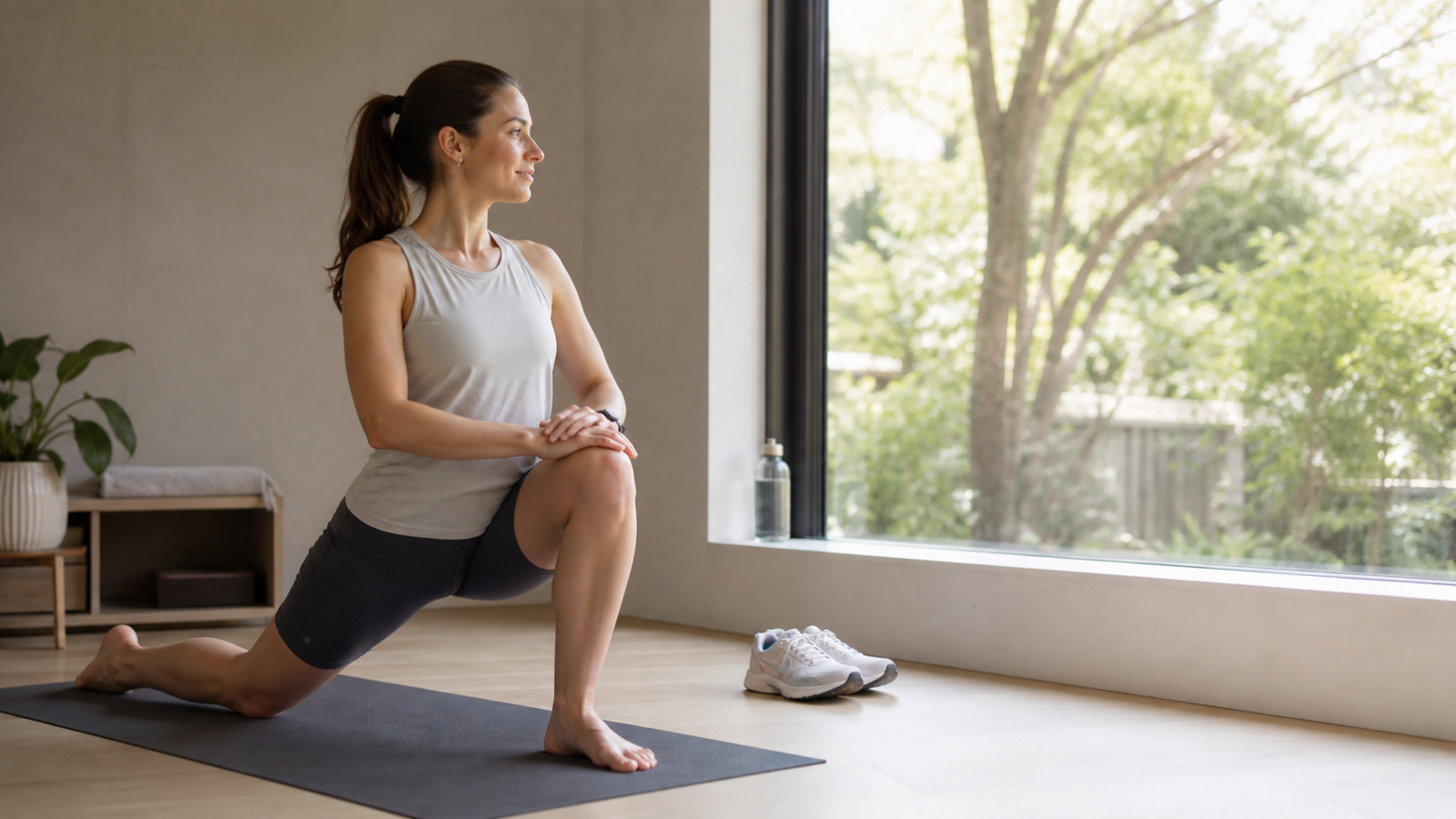
Featured image: original RunHQ editorial artwork titled “runhq-yoga-recovery-original”; provenance recorded in the media library.