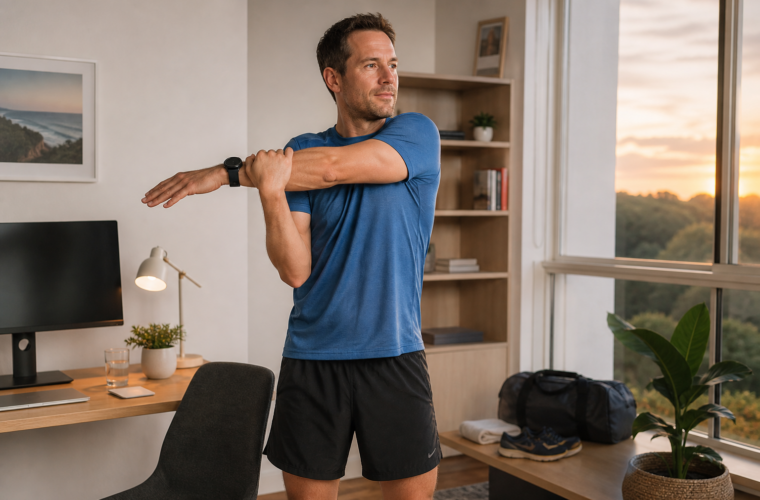

Downhills reward control more than bravado. On a trail run, the slope can lengthen your stride, increase braking forces and expose weak links around the hips, knees, ankles and feet. A short strength session can help you practise the positions that make descending feel smoother. This 25-minute routine is designed for runners who already tolerate basic bodyweight training and want a simple, repeatable way to build downhill control before a trail race or hilly long run.
downhill control: What “control” means
Downhill control is the ability to keep your centre of mass moving forward while your feet land quietly underneath you. It is not about leaning back and fighting gravity. A small forward lean from the ankles, soft knees and quick, comfortable steps usually reduce the temptation to overstride. Strength work cannot guarantee injury prevention, but it can give you more options when fatigue or uneven ground changes your rhythm.
Warm-up: five minutes
Start with two minutes of easy marching or jogging, then add ankle circles, ten slow calf raises and eight bodyweight squats. Finish the warm-up with two rounds of a 20-second single-leg balance on each side. Keep your eyes on a fixed point and use a wall for support if needed. The goal is to raise temperature and find a stable foot tripod before loading the exercises.
1. Split-squat isometric — three sets
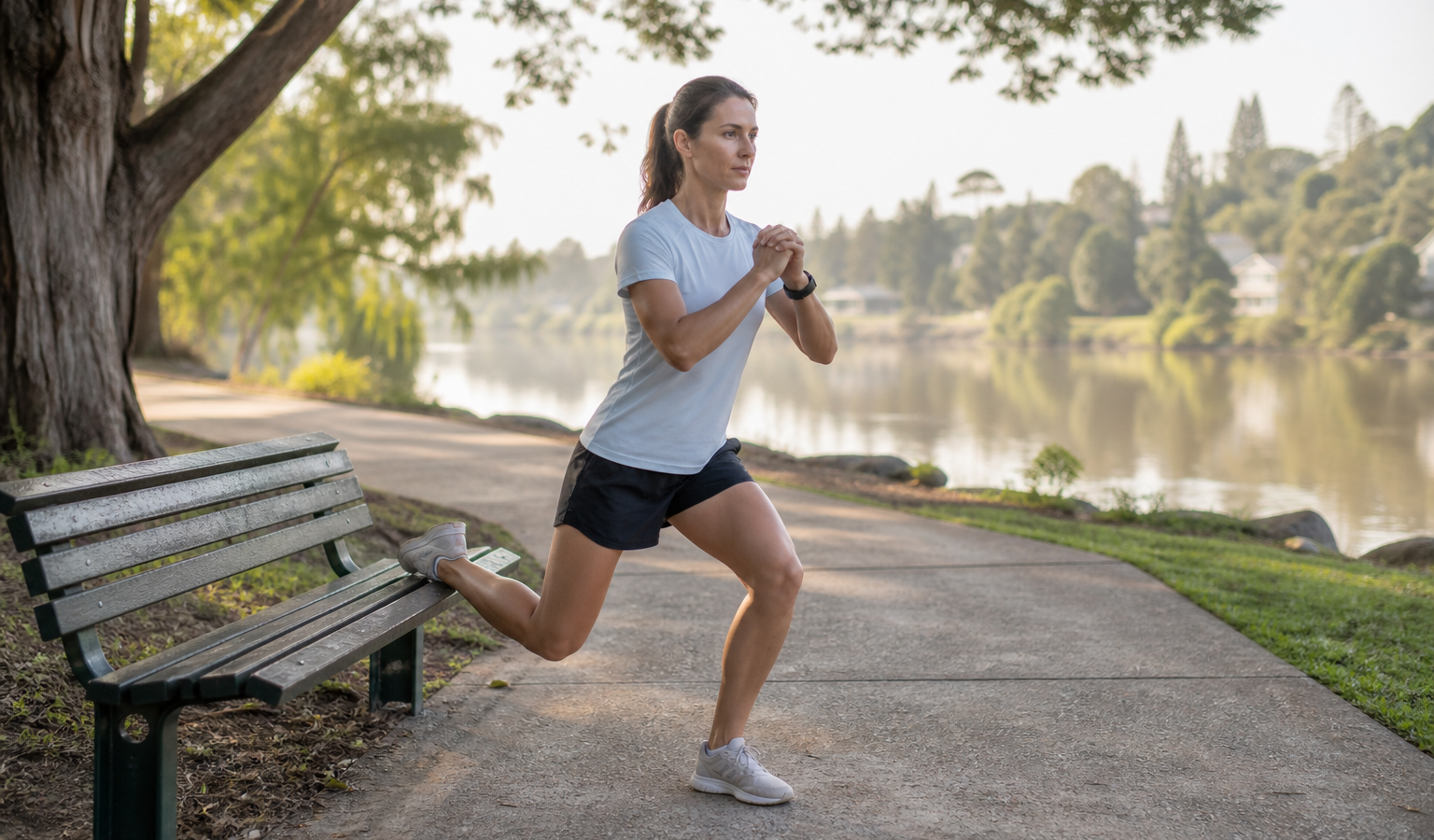
Step one foot back into a comfortable split stance. Bend both knees until the front thigh is angled down and pause for 20 to 30 seconds. Keep the front knee tracking over the middle toes and press the whole front foot into the floor. Swap sides. Rest 30 seconds between sides and repeat for three sets. The isometric pause teaches patience at the knee and hip, similar to the controlled position you need when a descent steepens.
2. Slow step-down — three sets of six
Stand on a low step or sturdy stair. Lower the free heel towards the floor for a count of four, lightly tap and drive back up through the standing leg. Keep the pelvis level rather than dropping to one side. Do six repetitions per leg for three sets, resting about 45 seconds. Lower the step height if the knee wobbles or the foot collapses. Quality matters more than depth.
3. Single-leg Romanian deadlift — two sets of eight
Balance on one leg with a soft knee. Hinge at the hip while the other leg reaches back, keeping your spine long and hips square. Use a light dumbbell only if you can keep the movement quiet. Return to standing by squeezing the glute of the supporting leg. Complete eight controlled repetitions per side for two sets. This builds posterior-chain coordination for the moments when a trail surface asks you to stabilise and redirect.
4. Calf-lowering sequence — two sets
Rise onto both forefeet, shift your weight to one side and lower the heel slowly for a count of three. Use both legs to come back up, then switch. Aim for eight repetitions per side. Keep the ankle aligned rather than rolling outward. If you have persistent Achilles or calf pain, stop and seek qualified assessment instead of pushing through.
5. Lateral reach and stick — two sets of five
Stand on one leg and reach the opposite foot diagonally to the side, then return and hold your balance for two seconds. Imagine placing a foot on a narrow trail without letting the knee cave in. Five reaches per side for two sets is enough. Progress by reaching farther or adding a light backpack, not by rushing.
Take it to the trail
After two or three weeks of consistent practice, use a gentle hill for a short technique block. Run or hike uphill, then descend at an easy effort for 30 to 60 seconds with quick steps and relaxed shoulders. Stop while form is still tidy. Add time gradually and keep the rest of the run easy. A trail race such as the Coastal Classic 30km has technical changes in surface and gradient, so general strength should be paired with sensible terrain practice rather than a sudden jump in downhill volume.
Pair this routine with your existing mobility work, including RunHQ’s post-run hip mobility reset. For training-watch comparisons that can help you review elevation and effort, visit runningwatches.com.au. The Australian Government’s physical-activity guidance is a useful general reference.
Session summary
- Warm up for five minutes.
- Split-squat isometric: three sets each side.
- Slow step-down: three sets of six each side.
- Single-leg Romanian deadlift: two sets of eight each side.
- Calf lowering: two sets of eight each side.
- Lateral reach and stick: two sets of five each side.
General information notice: This article is provided for general information and educational purposes only. It is not medical, strength-coaching or individual training advice, and it does not replace assessment or guidance from a qualified health professional. If you have an injury, ongoing pain, a medical condition, are pregnant, or are unsure whether these exercises are suitable for you, seek personalised advice from a qualified clinician before starting or changing your training.
Related reading: Pilates for Runners: A 20-Minute Strength and Control Session.