
Hydration before a run works best as an ordinary part of the day, not a last-minute challenge to drink as much as possible. Needs vary with body size, weather, session duration, sweat rate, food and access to fluids. This guide offers a practical framework rather than a fixed prescription.
Hydration before a run starts with normal daily drinking
Most runners do not need a complicated loading routine before a short easy run in mild conditions. Drink regularly with meals and according to thirst, then review the forecast and planned session. Pale-straw urine can provide context, but colour is affected by food, supplements and timing; it is not a precise hydration test.
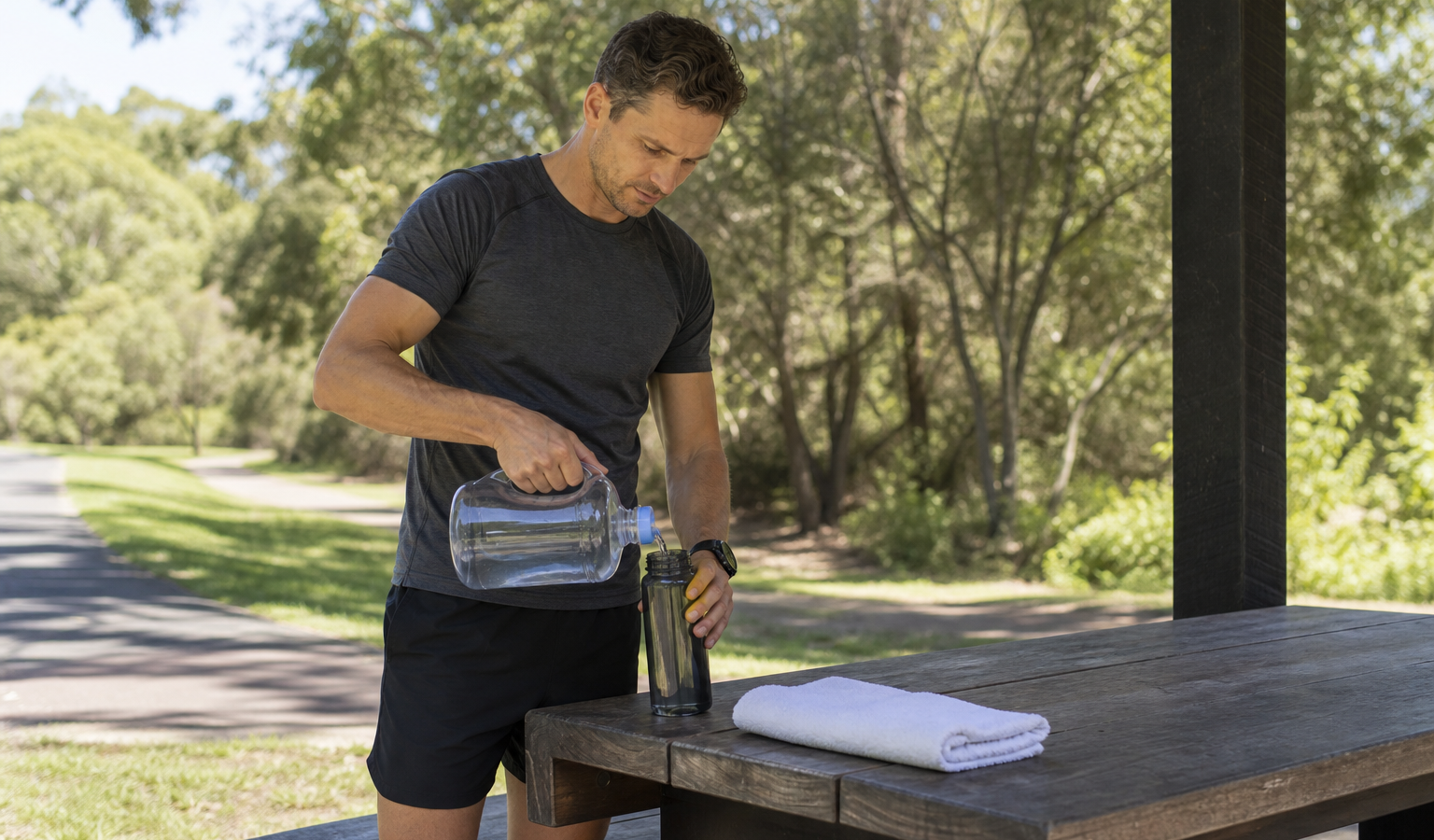
Prepare a reusable bottle before training with hydration options from Mizu Australia.
Two to four hours before
Use this window to eat and drink normally. A meal or snack containing some fluid and salt may contribute to hydration. If you have been travelling, working outdoors or waking after a hot night, begin addressing thirst gradually rather than consuming a large volume immediately before running.
Runners with medical conditions affecting fluid or electrolyte balance, or those taking relevant medication, need individual clinical advice. Generic sports-drink rules may be inappropriate.
The final hour
Take small amounts according to thirst and comfort. Avoid forcing fluid when you already feel well hydrated, because excessive intake can cause discomfort and, in extreme circumstances, dangerous dilution of blood sodium. Practise your routine on ordinary training days before using it for a long run or event.
Match the plan to the session
- Short easy run: normal daily hydration may be sufficient when conditions are mild.
- Longer run: consider access to water, route fountains or what you can comfortably carry.
- Hot or humid run: reduce pace, seek shade, consider a cooler time and carry or plan fluids.
- Race or group run: review aid-station locations and event guidance in advance.
Water or sports drink?
Water may suit many shorter sessions. During longer or higher-intensity running, a sports drink can provide carbohydrate and electrolytes, but it is not automatically necessary. Taste, stomach tolerance, sweat losses and nutrition goals matter. An accredited sports dietitian can help develop a plan for high-volume training or events.
Compare current GPS watches and hydration-reminder features at Running Watches Australia. Device prompts should support, not replace, body awareness and professional advice.
Do not use body weight as a contest
Some runners compare body weight before and after training to understand fluid loss, but a single result is affected by drinking, food, bathroom stops and measurement error. The aim is not to replace every gram immediately or to finish heavier than you started. Individual assessment is most useful when training is long, frequent or conducted in heat.
Plan the route
For unfamiliar distances, map fountains, shade and an exit option. RunHQ’s 10K-to-half-marathon bridge includes progressive long runs where hydration can be practised. The rescheduling guide can help move demanding sessions away from extreme weather.
Warning signs
Stop running and seek appropriate help for confusion, collapse, chest pain, faintness, severe headache, vomiting, marked weakness, unusual breathlessness or worsening symptoms. Heat illness can become serious quickly. Do not rely on a watch reading to rule out a problem.
Conclusion
A sound pre-run hydration plan is gradual and specific to the day. Drink normally, adjust for heat and duration, avoid forced overdrinking and rehearse event routines in training. The simplest plan that keeps you comfortable and safe is often the most repeatable.
Sources and image credit
- Australian Institute of Sport: hydration
- Sports Dietitians Australia: fluids in sport
- Healthdirect Australia: heatstroke
- Image: original AI-assisted RunHQ editorial artwork. © RunHQ / Charles R Summer.
Related reading: Pre-Run Hydration: A Practical Checklist for Everyday Runners.