
Pilates balance for busy runners: a 10-minute desk-to-mat reset with controlled movements and practical ways to fit it around your running.
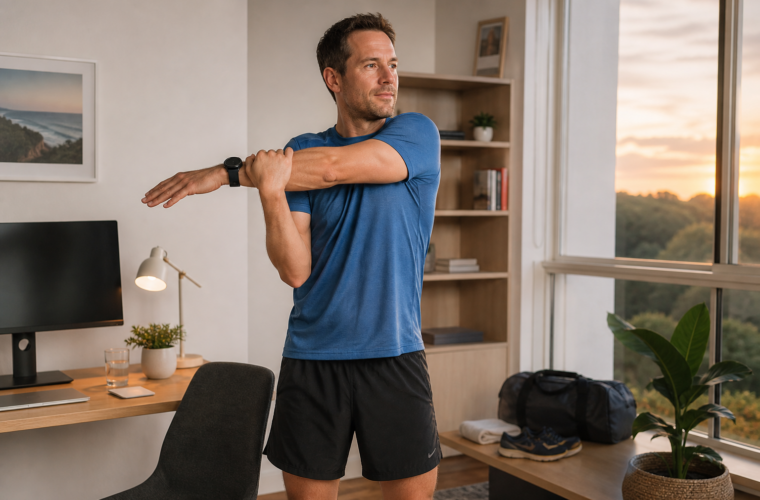
Pilates balance work can be a useful bridge between a desk day and an easy run. This ten-minute desk-to-mat reset is built around control, breathing and small ranges rather than fatigue. It suits runners who want to wake up the feet, hips and trunk after sitting, travelling or waiting for a session to start.
Use it on an easy day or after a short walk. Keep one hand near a wall, clear the floor and move slowly enough to notice whether one side feels different. The Australian Government movement guidelines encourage regular activity and strengthening, but this routine is general information, not a personalised prescription.
[adinserter block=”1″]
Pilates balance for busy runners: Minute 1: arrive and breathe
Stand with feet under the hips. Soften the knees and take four quiet breaths, letting the ribs move without forcing a deep inhale. On each exhale, imagine the crown of the head lifting while the shoulders stay relaxed. Shift weight from heel to forefoot and then from side to side. These small shifts help you notice balance before the larger movements begin.
Minutes 2–3: feet and ankles
Hold a wall lightly and lift the toes while keeping the heels down for eight repetitions. Then lift the heels for eight slow calf raises. Pause at the top and lower for a count of three. Finish with six ankle rocks per side: step one foot back, keep the heel heavy and bend the front knee a few centimetres. Stay within a comfortable range; the aim is awareness, not a stretch contest.
Minutes 4–6: hips and trunk
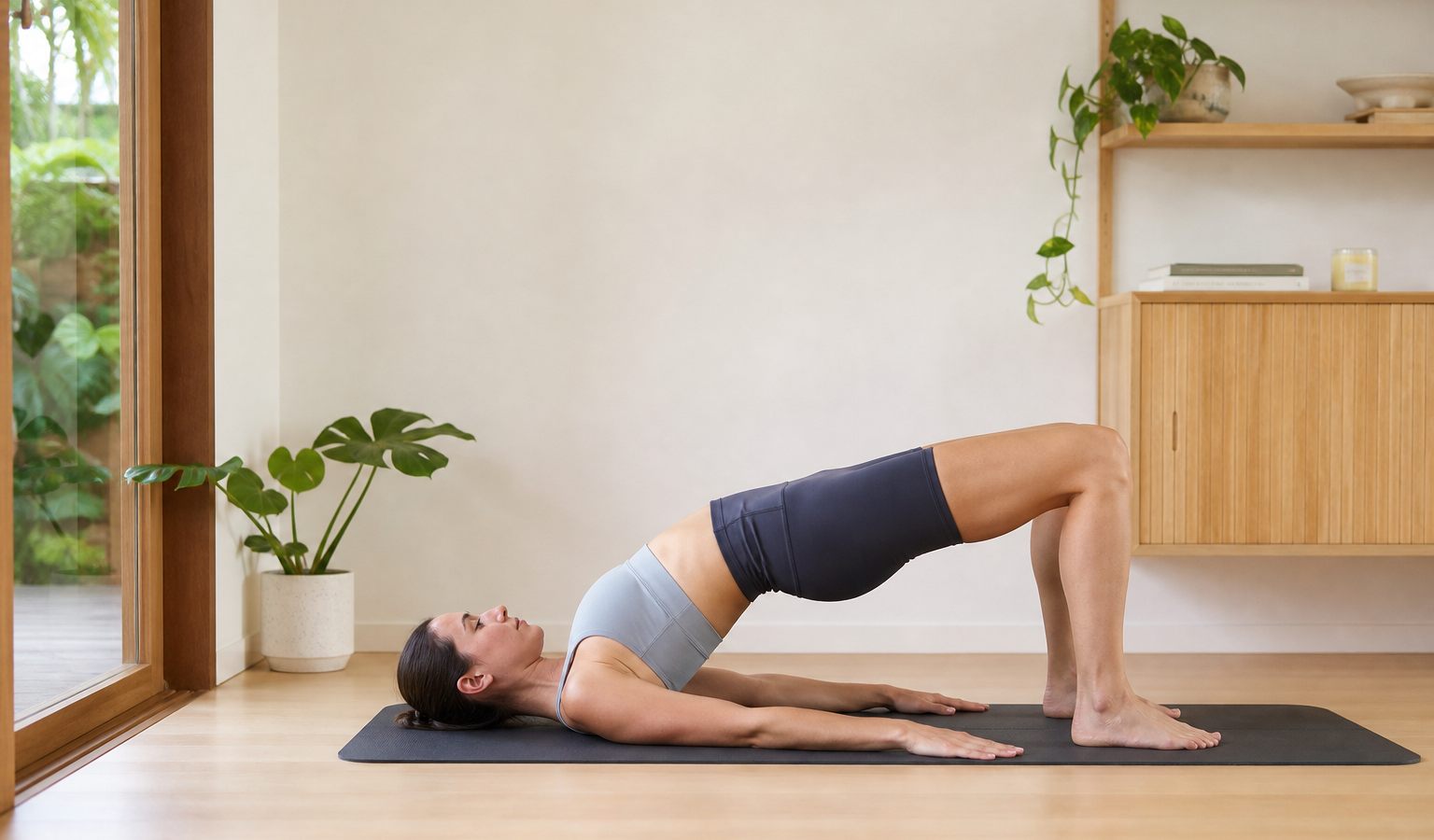
Move to a mat or firm surface for a bridge. Complete six repetitions, pressing evenly through both feet and lowering with control. Add a side-lying clam on each side, six repetitions with the feet together and the pelvis steady. Roll to hands and knees for four bird-dog reaches per side. Slide the hand and opposite foot away, pause for one breath and return without twisting.
[adinserter block=”1″]
Minutes 7–8: balance practice
Stand behind a chair or beside the wall. Balance on one leg for three calm breaths, then change sides. If the ankle wobbles, let the toes touch down and restart. Add a slow knee lift on each side, stopping before the pelvis tips. Keep the supporting knee soft and the gaze on a fixed point. Consistent, comfortable practice matters more than holding a perfect pose.
Minutes 9–10: runner reset
Finish with six gentle hip hinges, sending the hips back while keeping the spine long. Follow with six wall push-ups and a relaxed walk around the room. Ask whether you feel more organised, warmer or more tired. If you feel tired, leave the routine there and keep the next run easy. A running watch can display recovery estimates, but those numbers are not a diagnosis; compare practical models at runningwatches.com.au.
Fit it around training
Place the reset after a low-load day, before mobility or as a travel break. Do not use it to push through sharp pain, numbness or symptoms that alter your stride. RunHQ’s training library has ideas for progressive 5K and 10K weeks, while the events calendar can help you work backwards from a race.
Sources
Health and safety notice
This article provides general information only and is not personalised medical, health, nutrition or exercise advice. New or returning runners, pregnant readers, people taking medication, and anyone with a health condition or injury should consult an appropriately qualified health professional or accredited exercise professional before starting or changing training. Stop exercising and seek prompt professional help if you experience chest pain, fainting, severe or unusual breathlessness, sudden weakness, confusion, numbness or any other concerning symptoms.
Featured image: original RunHQ editorial artwork titled “Pilates balance and bridge for runners”, with provenance recorded in the media library.
Related reading: Desk-Break Mobility for Runners: A Practical Eight-Minute Reset.