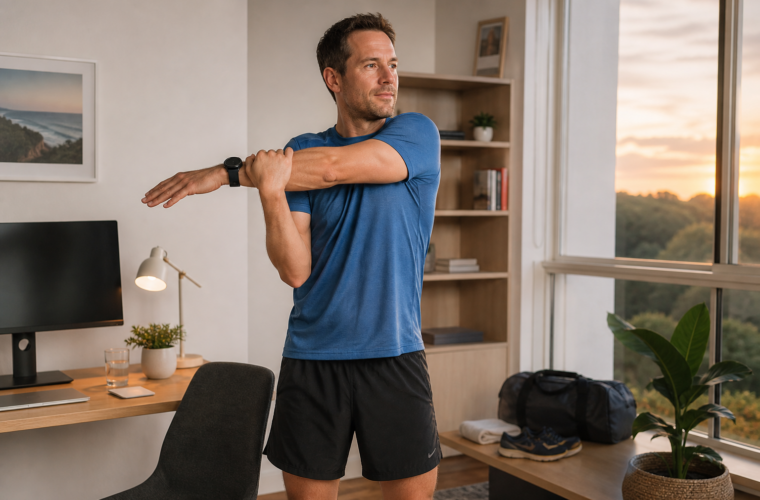

Pilates foot and ankle control for runners: explore a practical routine that also includes hip control and controlled movement.
Runners rely on the foot, ankle and hip to organise each landing, but useful Pilates work does not need to mimic running at high speed. This 20-minute session uses slow, supported movements to practise balance, calf control and hip stability on an easy day.
Pilates foot and ankle control: Set up safely
Use a sturdy chair or wall, a non-slip mat and enough space to move. Keep fingertips on support whenever balance is uncertain. Complete one or two rounds, moving slowly and stopping before fatigue changes alignment.
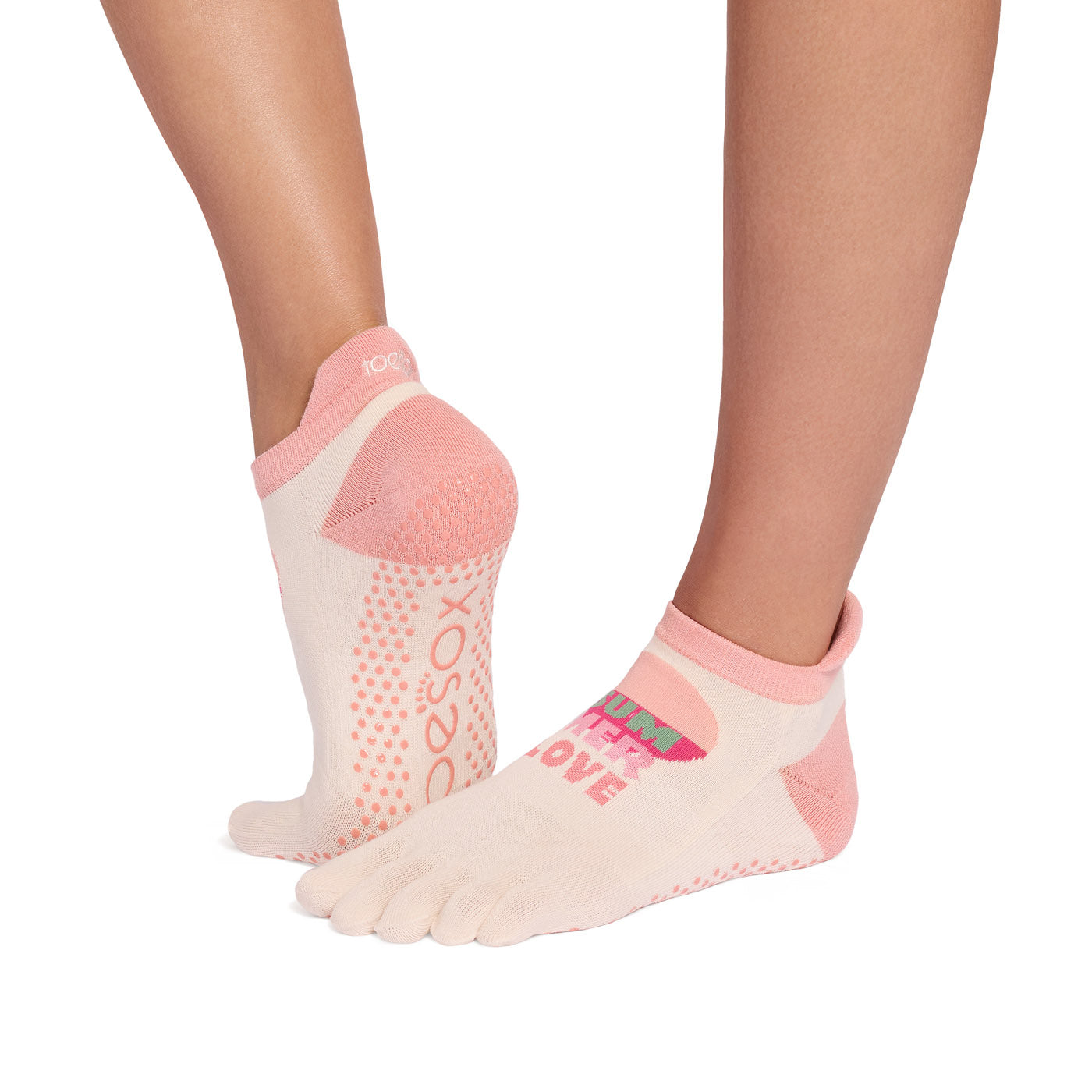
For studio activewear and grip socks, explore TAVI Active and ToeSox.
The 20-minute sequence
1. Foot tripod awareness
Stand with weight shared between heel, base of the big toe and base of the little toe. Lift and lower the toes gently, then settle them without gripping. Breathe for 30 seconds each foot.
2. Supported calf raise
Rise smoothly through both feet, pause briefly and lower under control. Complete ten repetitions. Progress to shifting slightly more weight toward one side only if the movement remains stable.
3. Bent-knee heel raise
Hold the chair, soften both knees and lift the heels a small distance. Keep the knees facing forward and complete eight to twelve controlled repetitions.
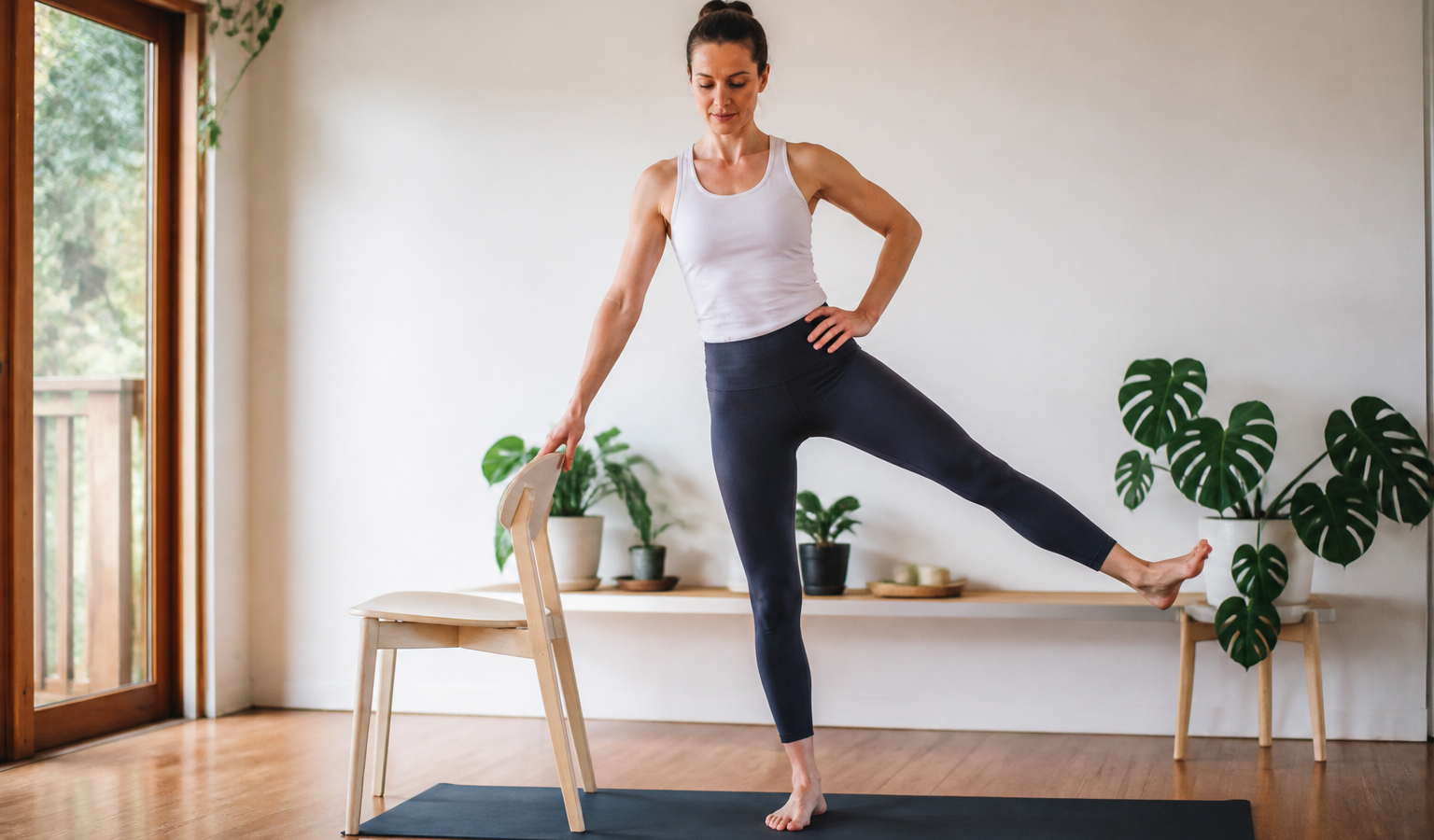
4. Standing side leg lift
Stand tall on one leg with support and slide the other leg sideways without leaning the trunk. Complete eight repetitions each side. Small, quiet movement is enough.
5. Single-leg balance reach
Balance with fingertips supported and reach the free foot lightly forward, sideways and back. Return to centre between directions. Complete three rounds each side.
6. Bridge with heel lift
Lie on your back with knees bent. Lift into a comfortable bridge, then raise one heel slightly without letting the pelvis twist. Alternate six times each side, or keep both feet down.
Keep reusable hydration nearby with bottle options from Mizu Australia.
Where it fits
Use this session after an easy run or on a separate recovery day, not immediately before intervals or a long run. RunHQ’s calf-strength progression provides a more load-focused option, while the flexible schedule guide helps space sessions.
Grip socks may suit indoor work when the surface and studio rules permit. TAVI and ToeSox offer options, but fit, traction and comfort should be checked individually. Shoes are also appropriate when they provide a more secure base.
Progress gradually
Add challenge by reducing fingertip support, slowing the lowering phase or adding a few repetitions—only one change at a time. Do not chase wobbling or fatigue. Balance improves through repeatable practice, not by turning every set into a test.
Use device data carefully
A watch can help track running load and recovery patterns; see Running Watches Australia. Device scores are context, not a diagnosis, and they should not override pain, fatigue or professional advice.
Conclusion
This Pilates routine supports calm practice of foot pressure, ankle control and hip stability. Use support generously, keep the range comfortable and finish feeling organised rather than exhausted.
Sources and image credit
- Australian Government movement recommendations
- Better Health Channel: exercise safety
- Image: original AI-assisted RunHQ editorial artwork. © RunHQ / Charles R Summer.
Related reading: Pilates for Runners: A 20-Minute Single-Leg Control Routine.