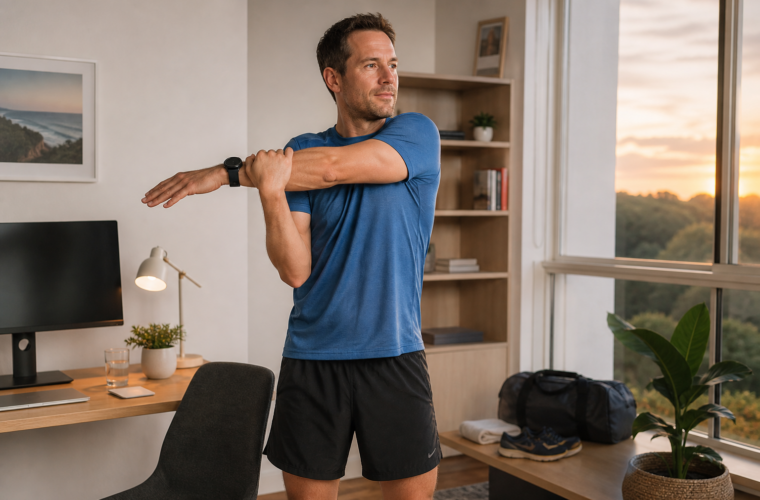

Post long run mobility: a gentle 12-minute routine with controlled movements and a practical focus on comfortable ranges.
A long run can leave calves, ankles and hips feeling worked, especially after hills or unfamiliar distance. A short mobility routine can help you shift from training mode into recovery without turning the cool-down into another workout. The goal is comfortable movement and relaxed breathing, not forcing range or trying to erase every sensation immediately.
post long run mobility: First, cool down gradually
Walk for five to ten minutes after finishing, allowing breathing and heart rate to settle. Better Health Channel advises warming up and cooling down gradually, while noting that stretching alone has limited evidence as an injury-prevention tool. Treat mobility as one small part of recovery alongside food, fluids, sleep and appropriate training progression.
If pain is sharp, changes your walking pattern or becomes worse with gentle movement, skip the routine and seek advice. Normal post-run tiredness should not be used to explain away a possible injury.
Refresh your training kit with reusable hydration options from Mizu Australia.
The gentle 12-minute routine
1. Ankle rocks — two minutes
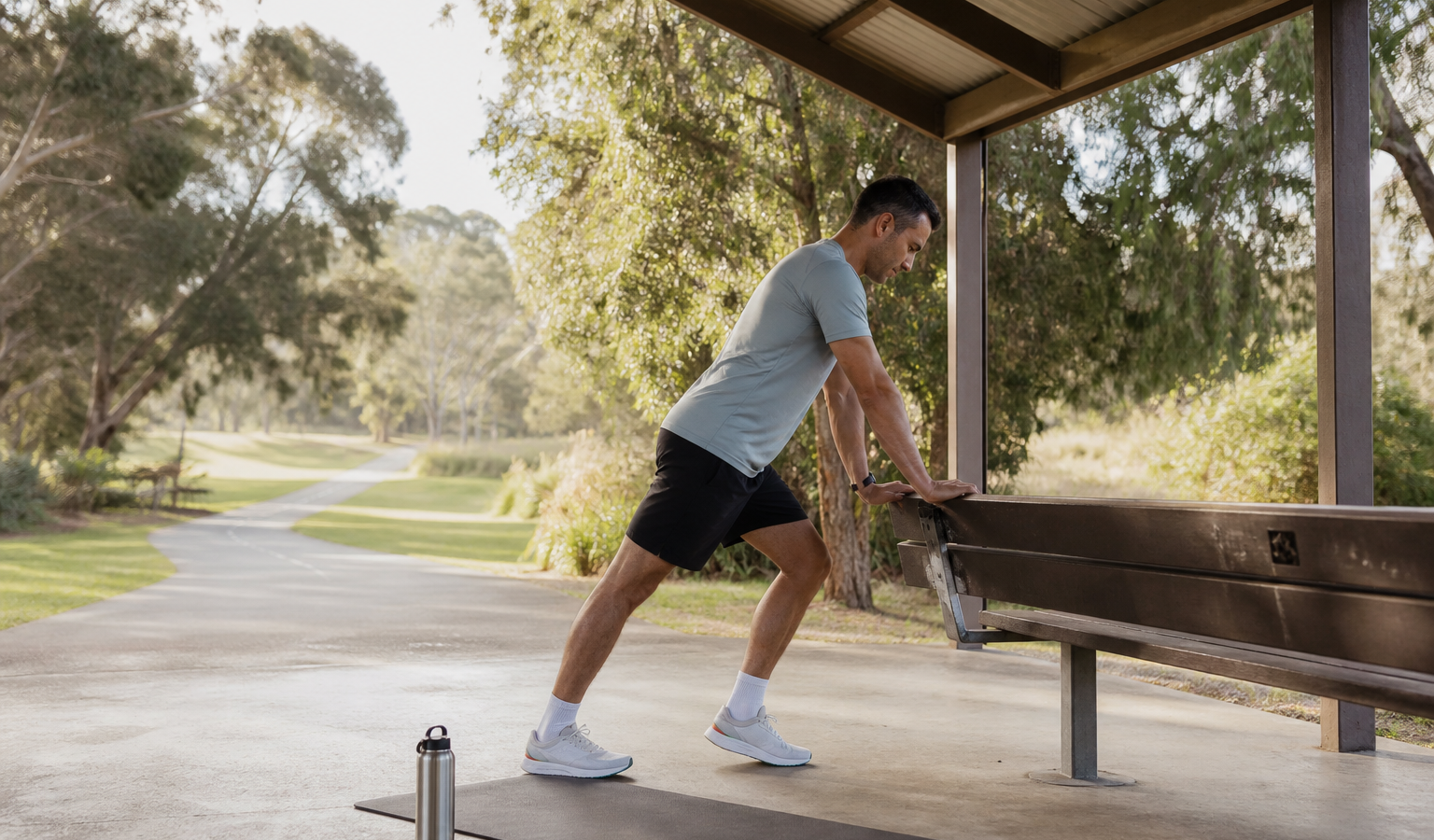
Stand facing a wall or bench with one foot forward. Keep the heel down and guide the front knee toward the toes, then return. Use a small, smooth range for eight to twelve repetitions before changing sides. The knee can track in line with the middle toes; there is no prize for pushing farther.
2. Supported calf stretch — two minutes
Place both hands on a wall or stable support. Step one foot back, keep the heel comfortable on the ground and gently bend the front knee. Hold for 20–30 seconds, release, and repeat with the back knee slightly bent to change the emphasis. Avoid bouncing.
3. Hip-flexor shift — two minutes
Use a split stance with hands on a stable chair or bench. Tuck the pelvis only slightly and shift forward until the front of the rear hip feels a mild stretch. Keep the ribs stacked rather than arching the lower back. Take three slow breaths and change sides.
4. Figure-four hip movement — two minutes
Sit on a secure bench or chair. Place one ankle lightly across the opposite thigh and hinge forward from the hips with a long spine. Stop well before knee discomfort. Hold for two or three calm breaths, return upright and repeat on the other side.
5. Open-book rotation — two minutes
Lie on your side with knees comfortably bent and arms reaching forward. Slowly open the top arm toward the other side while allowing the upper back to rotate. Keep the movement easy and breathe out as you open. Repeat five times each side.
6. Legs-up breathing — two minutes
Lie on your back with lower legs supported on a chair, or sit comfortably if the floor is unsuitable. Let the shoulders soften and take slow, unforced breaths. This is a transition into rest, not a performance test.
How mobility fits the training week
Use this routine after a long run or later the same day, provided it feels pleasant. On another day, RunHQ’s yoga recovery flow offers a broader gentle session, while the runner mobility routine can be used before easy training. Avoid stacking an intense flexibility session onto muscles already fatigued by a peak long run.
Mobility cannot compensate for a schedule that increases distance too quickly. Keep easy days easy and use the weekly running schedule to space demanding sessions. Runners building toward longer races can pair these habits with RunHQ’s progressive first-marathon plan.
For pace, recovery and training-load features, explore independent guides at Running Watches Australia.
Hydration and recovery basics
Replace fluids according to thirst, conditions and your individual sweat losses; avoid assuming that more is always better. A reusable bottle can make regular sipping convenient, and Mizu Australia lists several formats. After longer sessions, include carbohydrate and protein in a normal meal or snack using RunHQ’s recovery nutrition meal builder.
Conclusion
The best post-long-run mobility routine is calm, brief and repeatable. Move within a comfortable range, use stable support and finish feeling more settled rather than more stretched. Recovery still depends on sensible progression, nutrition, hydration, sleep and time.
Sources and image credit
- Better Health Channel: physical activity — getting started
- Better Health Channel: exercise safety
- healthdirect: muscle aches and pains
- Image: original RunHQ editorial artwork created for this guide. © RunHQ / Charles R Summer.
Related reading: Post-Run Hip Mobility: A Gentle 12-Minute Reset.