
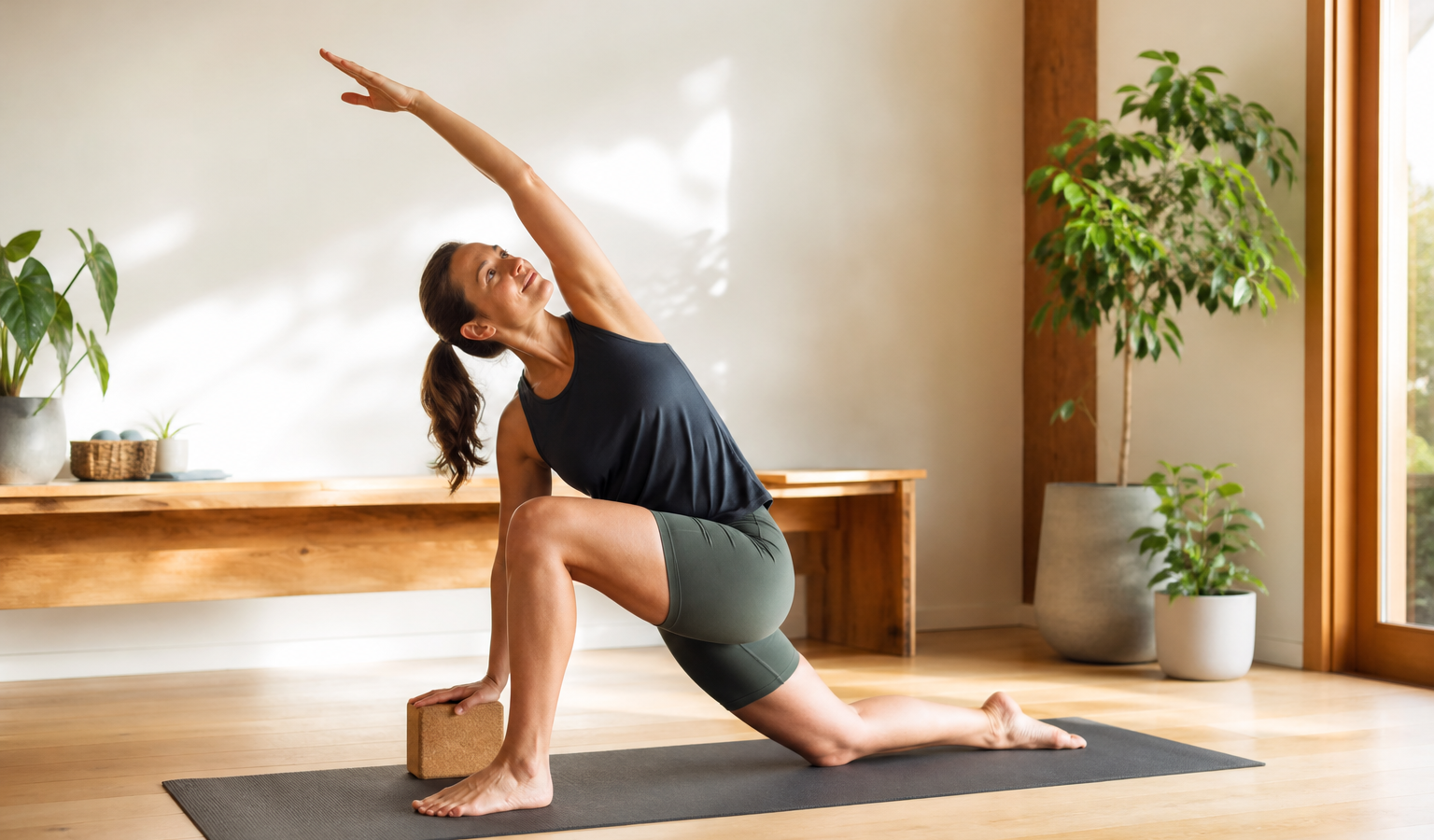
This supported low-lunge yoga sequence offers runners a gentle 12-minute routine for an easy or recovery day.
A supported low-lunge sequence can offer runners a short, quiet way to move the hips, ankles and upper back after an easy run or a day at a desk. It should not be treated as a flexibility competition. Use cushions, blocks or a chair, keep the range comfortable and breathe normally.
This 12-minute routine is deliberately modest. It suits an easy or recovery day when you want gentle movement without creating another hard session. Skip any position that produces sharp, catching or radiating pain.
[adinserter block=”1″]supported low-lunge yoga: The supported sequence
- Easy standing breaths — one minute. Stand with feet comfortable, soften the knees and take slow breaths without forcing posture.
- Supported low lunge — 60 seconds each side. Place the rear knee on padding and keep hands on blocks or a chair. Shift forward slightly while keeping the ribs stacked over the pelvis.
- Half split — 45 seconds each side. From the lunge, move the hips back and straighten the front knee only as far as comfortable. Keep the spine long rather than reaching for the toes.
- Low-lunge rotation — 45 seconds each side. Return to the lunge, keep one hand supported and rotate gently through the upper back.
- Downward-dog alternative — 90 seconds. Place hands on a wall or bench and step back into a supported hinge. Bend the knees as needed.
- Supported balance — 45 seconds each side. Hold a wall and stand on one leg, keeping the gaze steady and the foot relaxed.
- Resting breaths — two minutes. Lie comfortably or sit supported and allow breathing to return to normal.
Where it fits
After a run, walk until breathing settles before beginning. On a desk-heavy day, use the sequence as a movement break. Before running, choose a smaller range and more dynamic movements, then complete a normal walking or jogging warm-up. Do not use a long passive stretch immediately before a fast session if it leaves the legs feeling flat or unstable.
[adinserter block=”1″]Progress through control
Keep the same routine for several weeks before adding depth. Progress can mean steadier balance, easier breathing or less reliance on the chair. It does not need to mean pushing further into every position. If balance is the limiting factor, use more support so the intended movement remains calm.
Build the sequence into a balanced week using RunHQ’s training library. The events calendar can help you place recovery around future goals. For watches with breathing or movement reminders, see Running Watches Australia.
Yoga can complement running, but it does not diagnose or repair an injury. Persistent pain, weakness, numbness or altered gait deserves qualified assessment.
Sources
Health and safety notice
This article provides general information only and is not personalised medical, health, nutrition or exercise advice. New or returning runners, pregnant readers, people taking medication, and anyone with a health condition or injury should consult an appropriately qualified health professional or accredited exercise professional before starting or changing training. Stop exercising and seek prompt professional help if you experience chest pain, fainting, severe or unusual breathlessness, sudden weakness, confusion, numbness or any other concerning symptoms.
Featured image: original RunHQ editorial artwork titled “yoga-low-lunge-recovery”, with provenance recorded in the media library.
Related reading: Yoga Balance for Runners: A Supported 15-Minute Routine.