
Yoga recovery for runners: an 18-minute supported flow with comfortable movements and practical guidance for arranging the session.
Runners do not need advanced poses to benefit from a calm yoga session. This 18-minute sequence uses supported positions, steady breathing and modest ranges to help shift from training into recovery. It suits an easy day or the evening after a moderate run, provided every movement feels comfortable.
yoga recovery for runners: Set up for comfort
Use a mat, a cushion and two blocks or sturdy books. Move slowly and avoid treating flexibility as a score. Yoga cannot replace rest, progressive training or clinical care, but it can provide a structured way to relax and explore gentle movement.
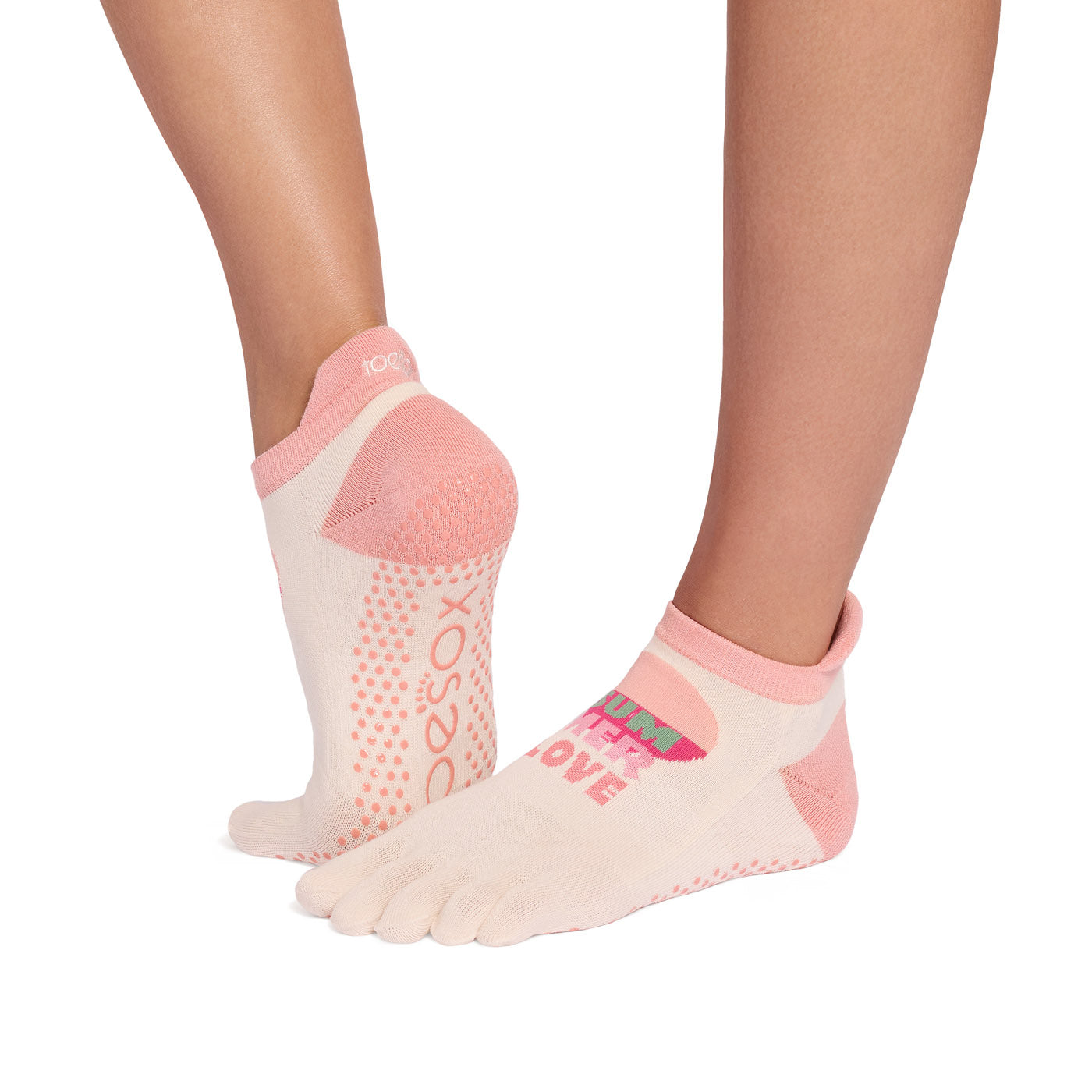
For activewear and studio grip socks, visit TAVI Active and ToeSox.
The 18-minute sequence
1. Constructive rest
Lie on your back with knees bent and feet supported. Take five slow, unforced breaths and allow the shoulders to soften.
2. Cat–cow
From hands and knees, alternate gently between rounding and extending the spine. Use six slow repetitions without pushing into end range.
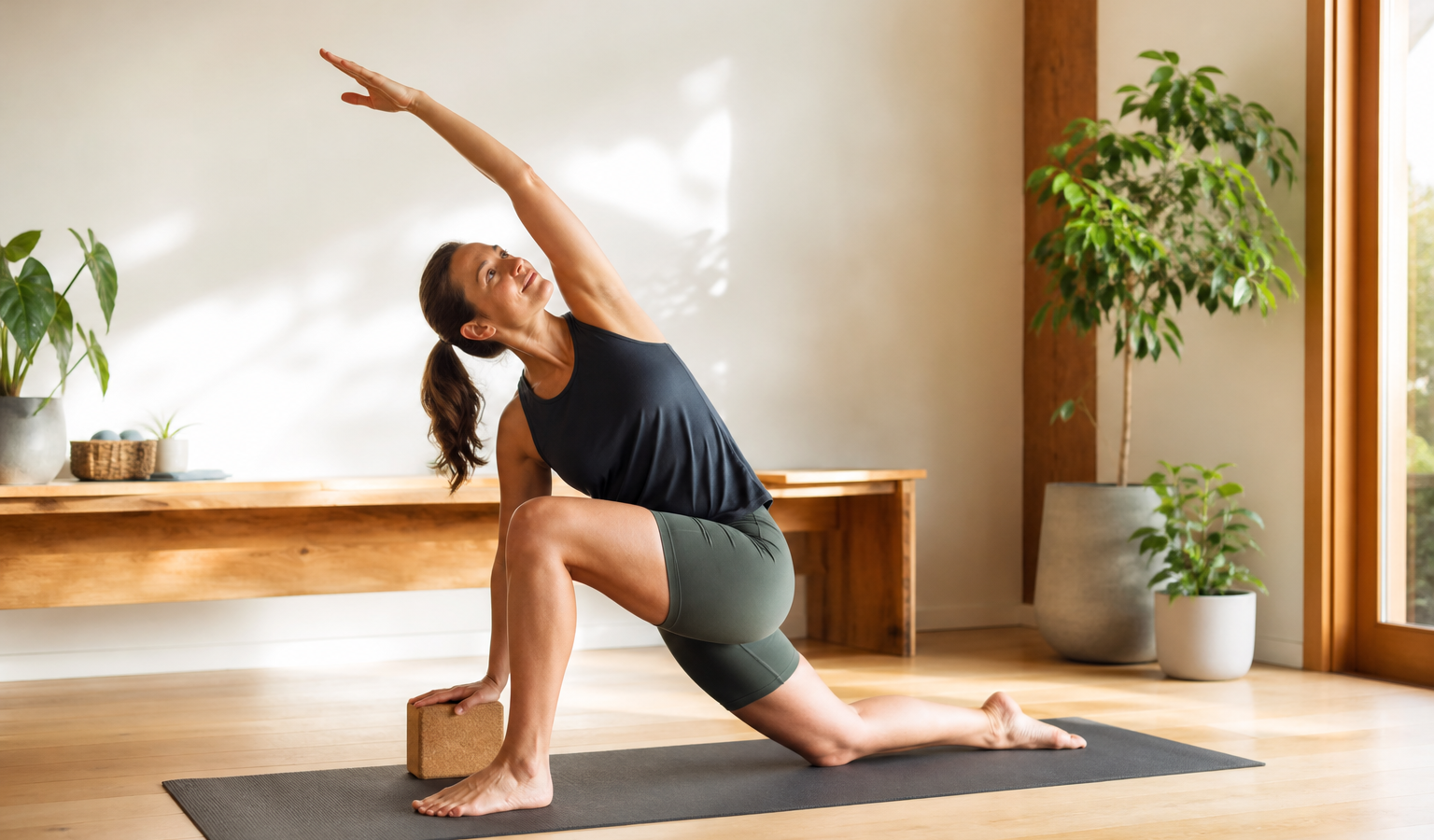
3. Supported low lunge
Step one foot forward from kneeling and place hands on blocks. Shift forward only until the front of the rear hip feels mild tension. Hold for three breaths each side.
4. Half split
From the lunge, move the hips back and straighten the front knee only as far as comfortable. Keep the spine long and use support. Hold for three breaths each side.
5. Thread the needle
From hands and knees, slide one arm under the body and rest the shoulder on a cushion if needed. Breathe gently for 30 seconds each side.
6. Reclined figure four
Lie on your back, cross one ankle over the opposite thigh and stay there or draw the legs closer. Stop before knee discomfort. Hold for four breaths each side.
7. Legs on a chair
Rest the lower legs on a chair and breathe quietly for two minutes. This final position is about settling, not stretching.
Keep reusable hydration nearby with bottle options from Mizu Australia.
Fit it around running
Use the sequence after an easy run or on a separate recovery day. Avoid a long, intense flexibility session immediately before intervals or racing. RunHQ’s flexible weekly schedule helps separate demanding sessions, while the after-work mobility reset is a shorter pre-run option.
If you attend a class, tell the teacher about symptoms and training load. Grip socks may be useful where studio rules allow them, but a clean secure surface matters most.
Recovery beyond the mat
Sleep, adequate food and sensible training progression have greater influence than any single pose. Use the recovery meal builder after longer sessions. A watch may help track training patterns; see Running Watches Australia, while treating device metrics as context rather than diagnosis.
Conclusion
A useful yoga recovery flow is supported, comfortable and repeatable. Breathe normally, choose smaller ranges when needed and finish feeling calmer rather than challenged. Recovery is the goal, not performance.
Sources and image credit
- Better Health Channel: exercise safety
- healthdirect: muscle aches and pains
- Image: original AI-assisted RunHQ editorial artwork. © RunHQ / Charles R Summer.
Related reading: Yoga for Runners: A Gentle 20-Minute Recovery Flow.