
Yoga for runners can provide a calm way to move through comfortable ranges, practise balance and downshift after training. It does not need to involve extreme flexibility, long holds or a heated studio. This 20-minute sequence is intentionally gentle and works best after an easy day or as a standalone recovery session.
yoga for runners: Before you begin
Use a mat or non-slip surface and keep a chair or wall nearby. Move slowly enough to notice whether a position feels like mild muscular effort or an unwanted pinch, catch or nerve-like sensation. Breathing should remain comfortable. Skip any pose that does not suit your body today.
The 20-minute recovery flow
- Easy breathing — 2 minutes. Lie down or sit comfortably. Let the exhale lengthen without forcing it.
- Cat–cow — 60–90 seconds. Move the spine gently between comfortable flexion and extension. Keep the range modest.
- Child’s pose to hands-and-knees — 60 seconds. Shift back only as far as knees and hips tolerate.
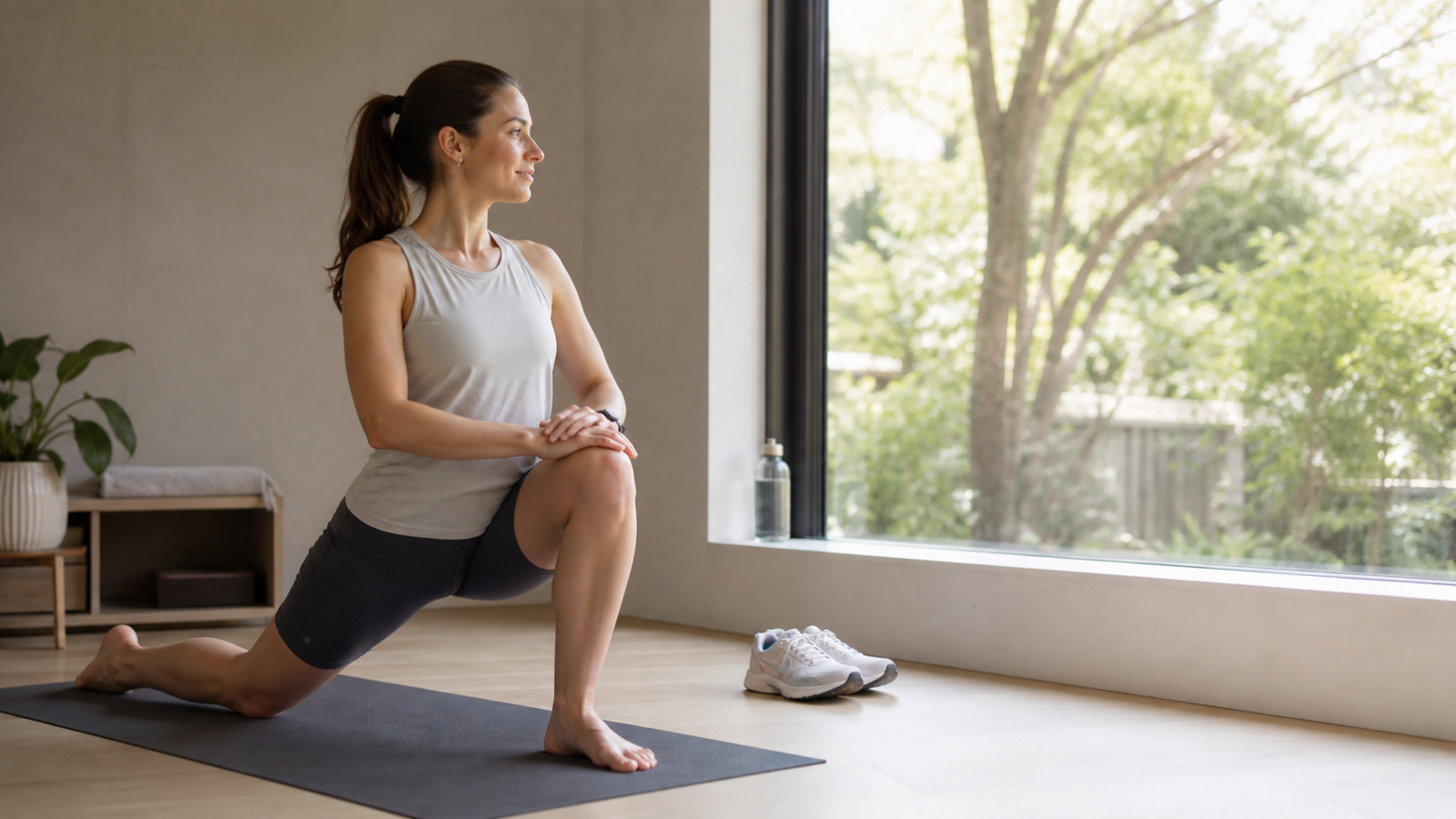
- Low lunge — 45–60 seconds each side. Pad the rear knee and keep the front foot flat. Stay upright rather than pushing deeply forward.
- Half split — 45 seconds each side. From the lunge, shift the hips back slightly and straighten the front leg only to a comfortable point.
- Downward dog or wall dog — 60 seconds. Choose the wall version when wrists, shoulders or hamstrings prefer less load.
- Supported single-leg balance — 30 seconds each side. Use a wall and keep the standing knee soft.
- Supine figure-four — 45–60 seconds each side. Keep the head relaxed and avoid pulling aggressively.
- Gentle lying twist — 45 seconds each side. Allow the range to come from easy breathing, not leverage.
- Quiet rest — 2–3 minutes. Finish in a comfortable position and let breathing return to normal.
When to schedule yoga
Place this flow after an easy run, later on a strength day or on a recovery day. Avoid turning it into another hard session immediately before intervals or a long run. If you attend a class, tell the instructor about relevant injuries, pregnancy or health conditions and choose a level suited to your experience.
Yoga should not be used to stretch through acute pain or “fix” every sensation. Temporary stiffness can reflect training load, sleep, stress or normal variation. Persistent pain, swelling, weakness, altered gait or neurological symptoms deserve assessment by an appropriately qualified professional.
Build the complete recovery picture
Gentle movement is only one part of recovery. Regular meals, adequate fluids, manageable training and consistent sleep matter too. Use RunHQ’s food-first recovery-nutrition guide, weekly scheduling guide and 10-minute mobility routine to keep the week balanced.
For a studio-ready option, RunHQ’s Pilates for runners session offers controlled strength work. Independent watch comparisons are available at Running Watches Australia.
Sources and image credit
- Australian Government Department of Health: Recommendations for adults aged 18–64.
- Australian Government: 24-hour movement guidelines for all Australians.
By Charles R Summer. Featured image: original RunHQ editorial image generated for this article.
Health and safety notice: This article provides general information, not individual medical or exercise advice. If you are new or returning to exercise, pregnant, taking medication, or living with an injury or health condition, consult a qualified health or exercise professional before starting or changing training. Stop immediately and seek appropriate help for chest pain, faintness, unusual shortness of breath, severe or radiating pain, numbness, weakness, loss of function or symptoms that do not settle.
Related reading: Yoga for Runners: An 18-Minute Supported Recovery Flow.