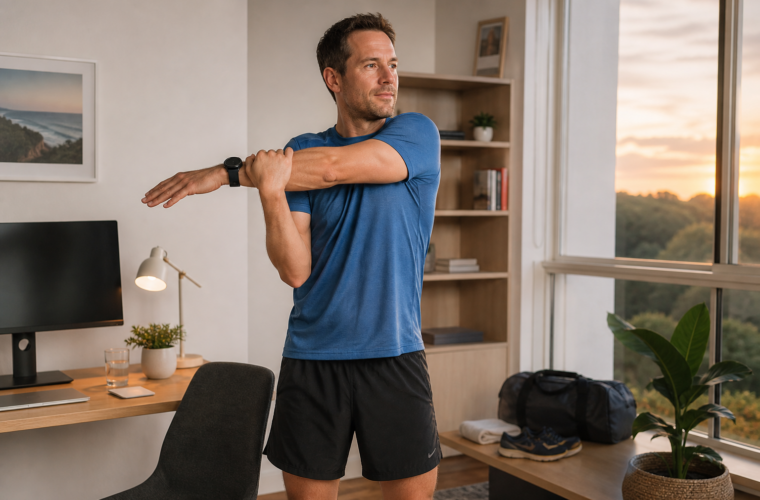

Yoga balance for runners: a 15-minute standing flow with controlled movements, comfortable ranges and practical session guidance.
Running repeatedly asks each leg to accept and redirect load, but balance practice does not need to become a test of wobbling. This supported 15-minute yoga flow uses a chair or wall so runners can explore foot pressure, hip control and calm breathing in comfortable ranges.
yoga balance for runners: Set up for stability
Place a sturdy chair on a non-slip surface and keep the backrest within easy reach. Practise barefoot only when the surface is safe; supportive shoes are appropriate when they feel more secure. Complete the flow after an easy run or on a separate recovery day, not immediately before a demanding session.
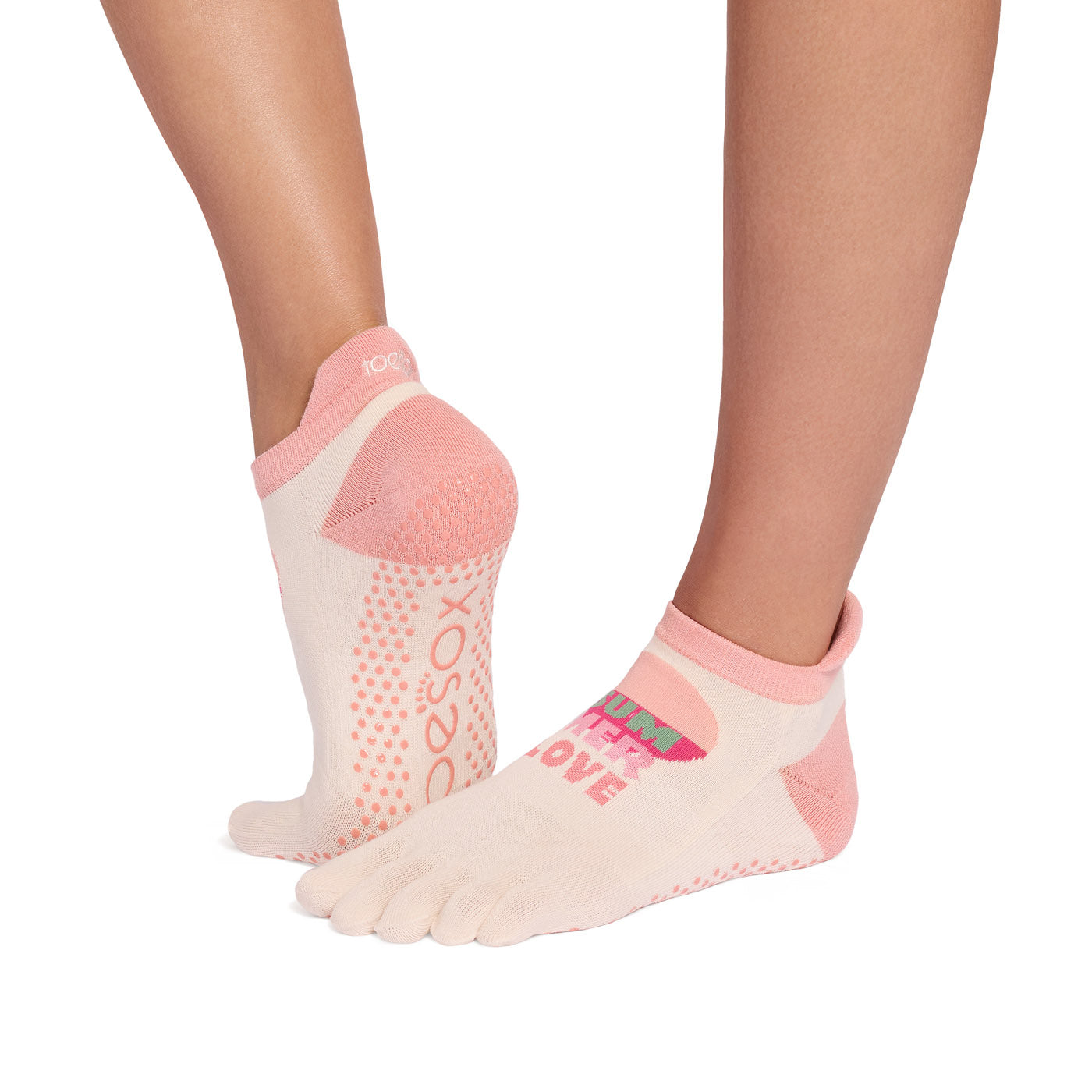
For studio activewear and grip-sock options, explore TAVI Active and ToeSox. Check fit and traction for your surface.
The 15-minute flow
1. Supported mountain stance
Stand beside the chair with feet comfortable and one hand resting lightly on support. Notice heel, big-toe base and little-toe base contacting the floor. Take four natural breaths without forcing posture.
2. Slow knee lifts
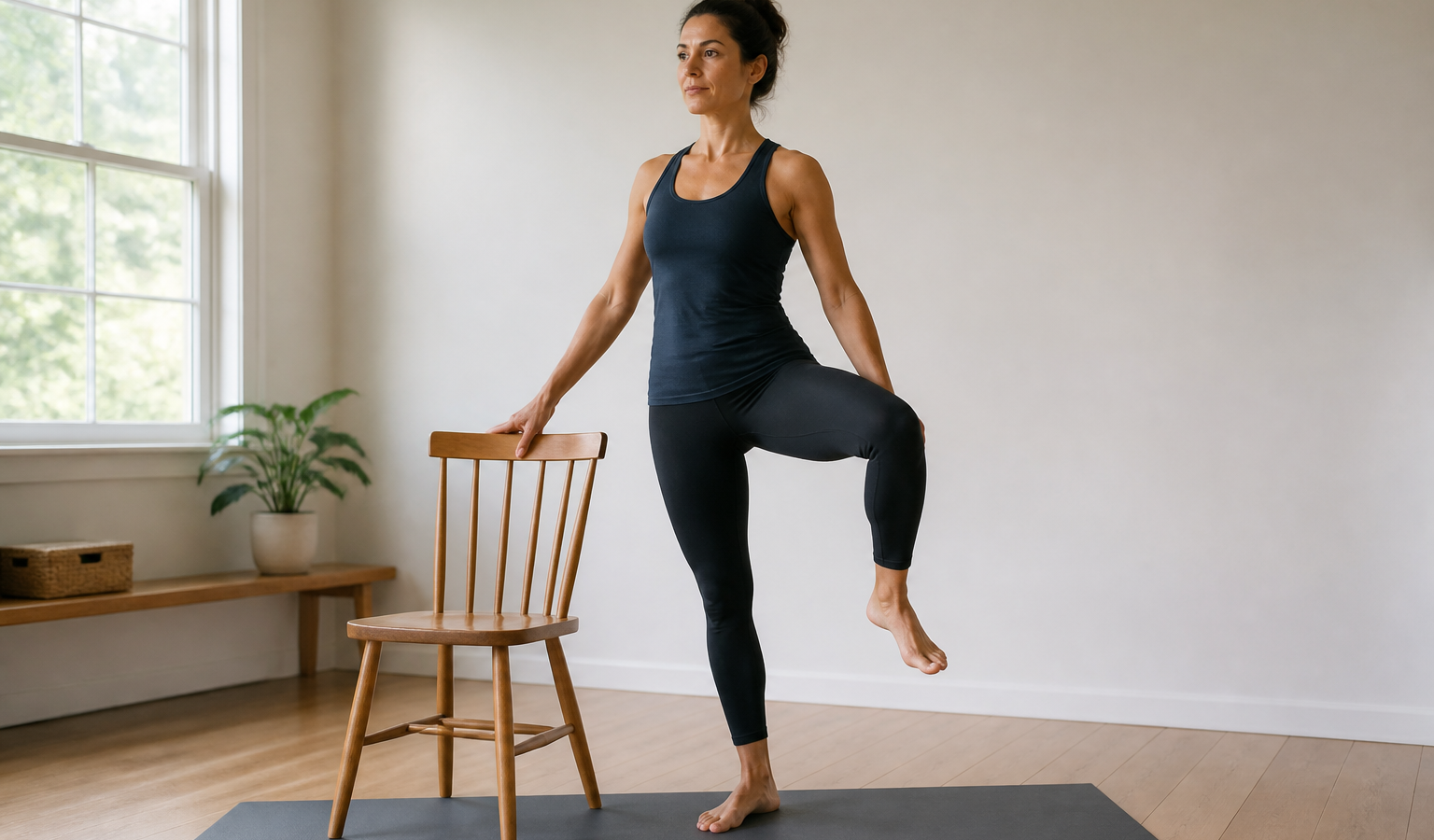
Shift weight onto one foot and lift the opposite knee to a comfortable height. Pause for one breath, then lower quietly. Alternate six times each side. Use as much chair support as needed.
3. Supported tree variation
Place one foot against the opposite ankle or lower calf, never directly on the knee joint. Keep toes on the floor as a kickstand if preferred. Hold for three breaths, change sides and repeat twice.
4. Chair-supported hinge
Hold the chair, soften the standing knee and send the hips back while the other toes remain lightly on the floor behind you. Keep the spine long and return upright. Complete six repetitions each side.
5. Warrior-one stance
Step one foot back into a short split stance, keeping the rear heel lifted if that is more comfortable. Face forward, bend the front knee slightly and reach the arms only as high as shoulders allow. Take three breaths each side.
6. Supported calf raise
Return to parallel feet, rise smoothly onto the balls of both feet and lower with control. Complete eight repetitions. Keep the movement small if the ankles feel tired after running.
7. Gentle forward fold at chair
Place both hands on the chair back and step away until the trunk can hinge comfortably. Keep knees soft and the spine long. Take four breaths, then walk forward and rise slowly.
Keep a reusable bottle nearby with hydration options from Mizu Australia.
Progress without removing safety
Progress by using lighter fingertip contact, adding one breath or moving more smoothly. Do not close the eyes, stand on unstable equipment or chase a dramatic pose. Support is a training tool, not a failure.
For more load-focused work, see RunHQ’s progressive calf-strength plan. The Pilates foot, ankle and hip routine offers another supported control session.
Use device data carefully
A watch may help track training distribution and recovery patterns; compare current guides at Running Watches Australia. Device scores do not diagnose readiness and should not override pain, dizziness or professional advice.
Conclusion
This standing yoga flow is designed to finish with steadier attention, not fatigue. Keep the chair close, choose modest ranges and practise consistently. Balance work is most useful when it remains calm enough to repeat.
Sources and image credit
- Australian Government movement recommendations for adults
- Better Health Channel: exercise safety
- Image: original AI-assisted RunHQ editorial artwork. © RunHQ / Charles R Summer.
Related reading: Yoga Balance for Runners: A Supported 15-Minute Routine.