
Pilates hip stability for runners: a side-lying session with controlled movement and practical guidance on session setup.
Side-lying Pilates exercises can help runners practise hip movement while keeping the load modest and the pace controlled. This 18-minute session focuses on alignment, comfortable range and repeatable technique. It suits an easy day and should finish well before fatigue changes the movement.
Pilates hip stability for runners: Set up comfortably
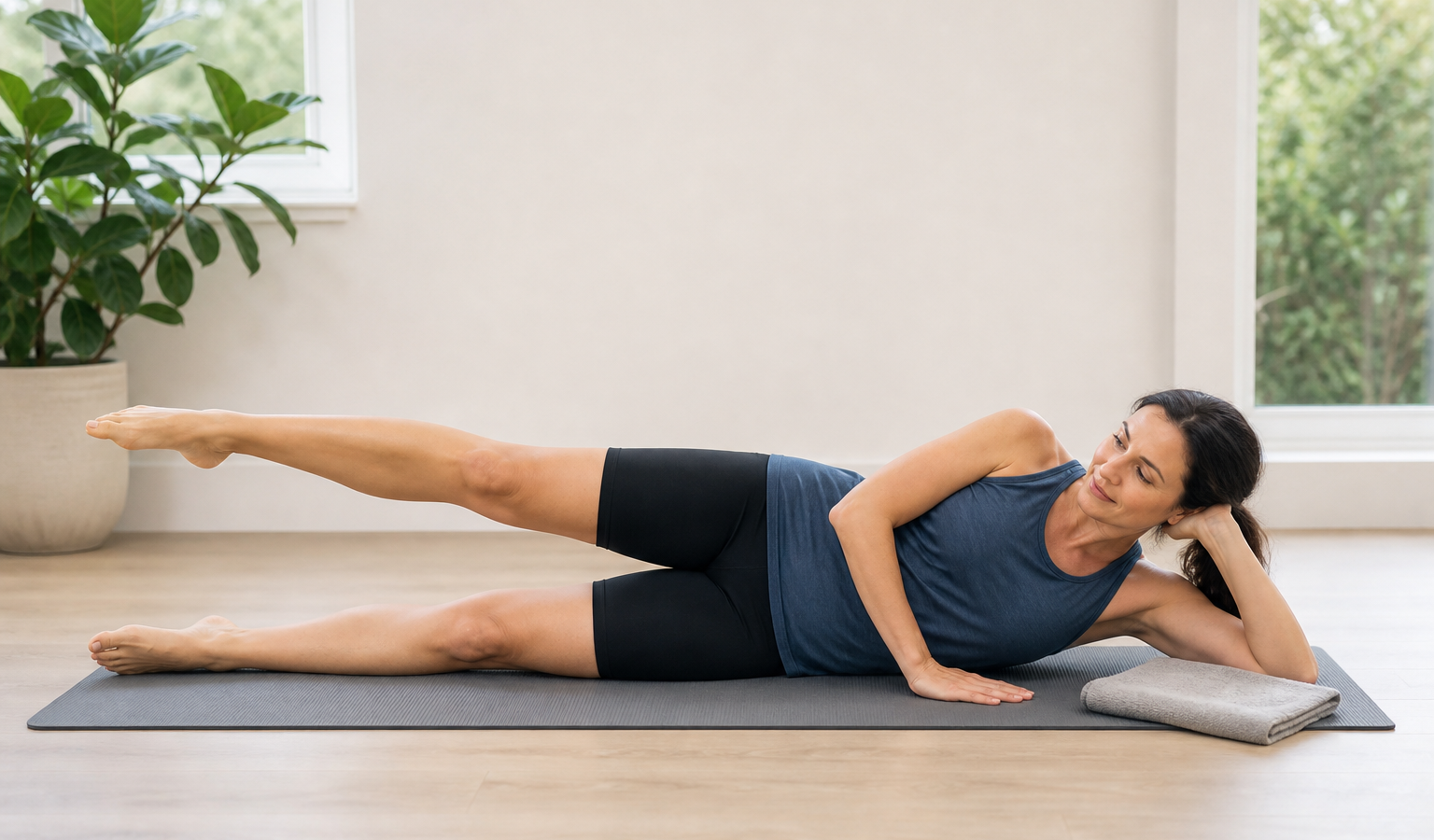
Use a non-slip mat and support the head with a folded towel so the neck remains neutral. Lie with shoulders and hips stacked, bottom knee bent for stability and top leg long. If lying on one side is uncomfortable, choose a standing supported alternative or seek individual advice.
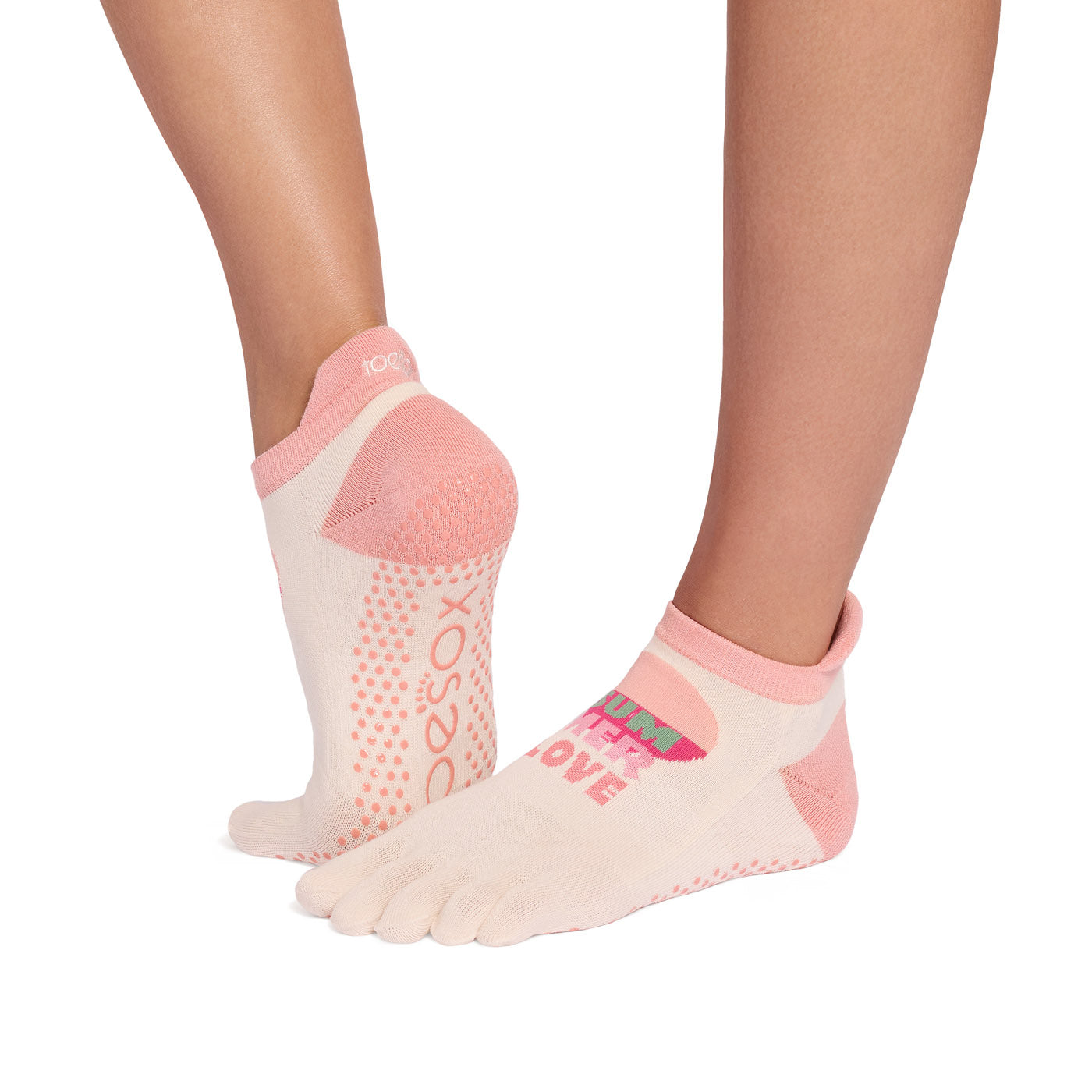
For studio activewear and grip-sock options, explore TAVI Active and ToeSox. Check fit, comfort and traction for your surface.
The 18-minute sequence
1. Side-lying breathing
Rest in the starting position and take four relaxed breaths. Notice the ribs expanding without forcing the waist away from the mat. Keep the shoulders soft.
2. Small top-leg lift
Lift the top leg a modest distance without rolling the pelvis backward. Pause briefly and lower slowly. Complete eight to twelve repetitions. A smaller range usually makes the movement easier to control.
3. Forward-and-back glide
Keep the leg near hip height or lower. Move it a short distance forward, return to centre and move slightly behind without arching the back. Complete six repetitions.
4. Bent-knee clam
Bend both knees and keep the heels together. Open the top knee only as far as the pelvis remains stacked, then close slowly. Complete eight to twelve repetitions.
5. Side-lying leg circle
Straighten the top leg and draw a circle no larger than a dinner plate. Complete four circles each direction. Reduce the circle if the trunk begins to rock.
6. Modified side plank
With the bottom knee bent and forearm under the shoulder, lift the hips a small distance. Hold for two or three breaths, lower and repeat three times. Skip this exercise if it irritates the shoulder, wrist or side of the hip.
7. Repeat the other side
Change sides slowly and repeat. Differences between sides are common; use the range and repetitions that allow good control rather than forcing symmetry in one session.
Keep reusable hydration nearby with bottle options from Mizu Australia.
Progress gradually
Begin with one round. After two or three consistent weeks, add two repetitions to one exercise or repeat the sequence—not both at once. An ankle weight or heavy band is unnecessary until body-weight movement is stable and appropriate for you.
Use RunHQ’s standing Pilates control guide for a supported alternative. The upper-body strength session can be placed on another easy day.
Use watch data carefully
Compare training-load and recovery features at Running Watches Australia, but treat device scores as context only. They do not diagnose pain or determine whether an exercise is suitable.
Conclusion
This side-lying session provides a quiet way to practise hip control without chasing a burn. Support the head, keep the range modest and stop while the movement remains smooth.
Sources and image credit
- Australian Government movement recommendations for adults
- Better Health Channel: exercise safety
- Image: original AI-assisted RunHQ editorial artwork. © RunHQ / Charles R Summer.
Related reading: Pilates Stability for Runners: A Controlled 15-Minute Circuit.