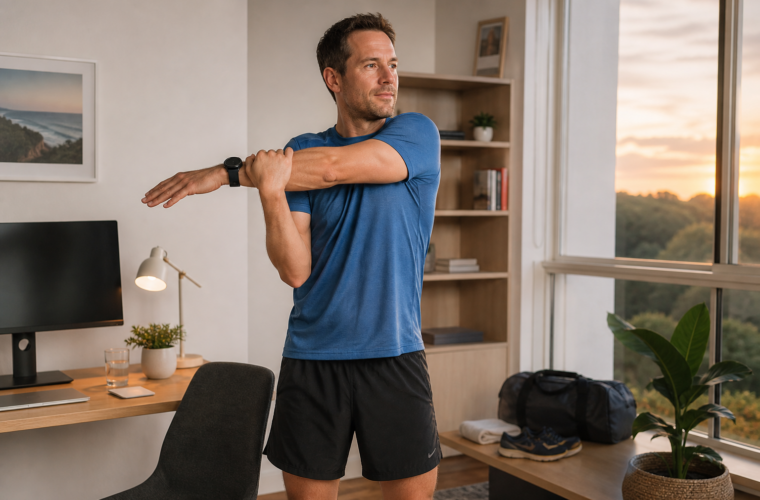

Single-leg strength for runners: a practical 25-minute session with controlled exercises and guidance on fitting it around your runs.
Running is a repeated series of single-leg landings, yet many strength routines focus mainly on two-legged exercises. A simple unilateral session can help runners practise balance, hip control and force production one side at a time. It does not need to be exhausting: two short sessions each week can fit beside easy running when loads progress gradually.
single-leg strength for runners: Why single-leg strength matters
Each stride asks one leg to accept load while the trunk and pelvis remain organised. Single-leg exercises expose side-to-side differences and let you train with modest equipment. Strength work cannot guarantee injury prevention or replace sensible mileage progression, but it can be one useful part of a rounded plan.
The Australian Government’s adult movement recommendations include muscle-strengthening activity on at least two days per week. Beginners should first learn comfortable technique, then add repetitions, range or resistance one variable at a time.
Track running and recovery trends with independent watch guides at Running Watches Australia.
The 25-minute runner strength session
Warm up with five minutes of easy walking, ankle rocks, bodyweight squats and relaxed marching. Use a wall, rail or bench for balance whenever needed. Complete two sets of each exercise, resting 45–90 seconds between sets.
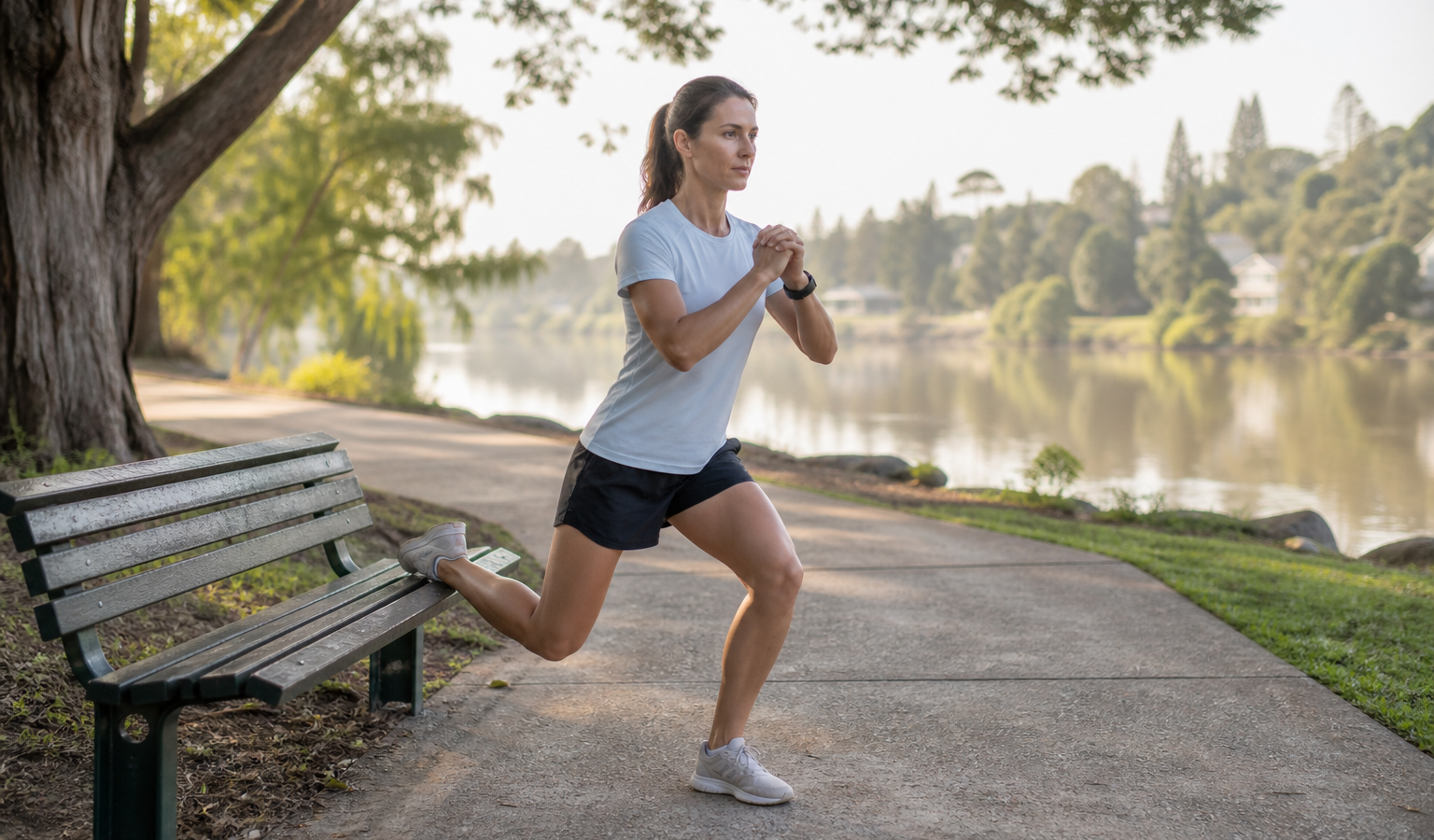
1. Supported split squat
Stand in a comfortable staggered stance and lower through a small range while keeping the front foot planted. Use eight to ten controlled repetitions each side. Increase range only while alignment and comfort remain steady.
2. Single-leg calf raise
Hold a stable support, rise smoothly onto the ball of one foot and lower under control. Begin with six to twelve repetitions each side. If one leg cannot manage the movement, use both feet to rise and shift more weight to one side during the lowering phase.
3. Low step-down
Stand on a low step, keep the stance knee tracking comfortably and tap the opposite heel toward the floor. Use six to eight repetitions each side. Reduce the step height if the pelvis drops sharply or the knee position becomes difficult to control.
4. Single-leg hip hinge
With fingertips on a wall, soften one knee and hinge at the hip while the other leg reaches behind. Keep the spine long and return by pressing through the stance foot. Start with six slow repetitions per side before considering a light weight.
5. Side plank variation
Use a bent-knee side plank or a full version depending on experience. Hold for 15–30 seconds while breathing normally. This trains trunk endurance without needing excessive movement.
6. Marching carry
Hold a light weight or loaded bag on one side and march slowly for 20–30 seconds, keeping the torso tall. Change sides. The exercise should challenge control without straining your grip or back.
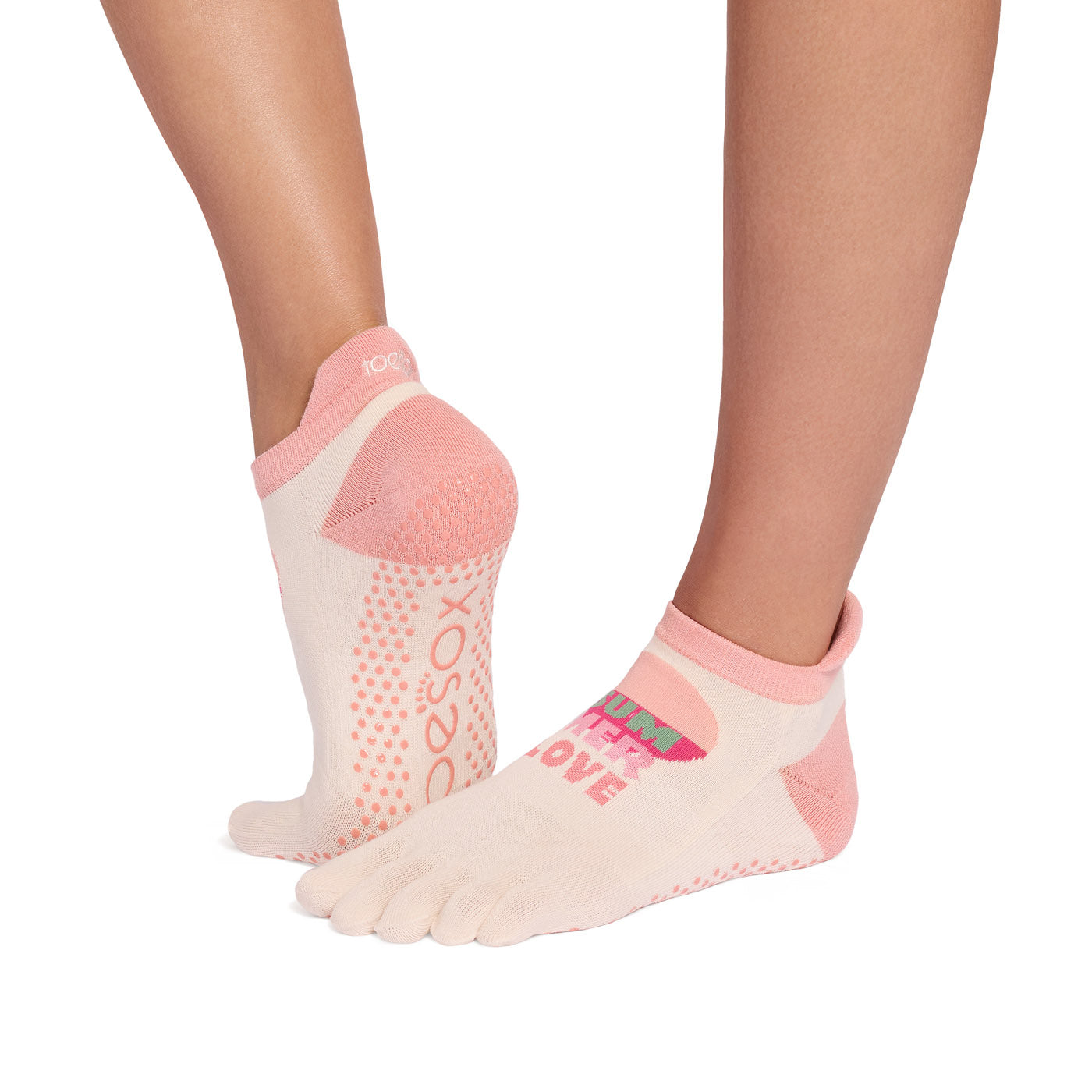
For studio-to-run activewear and grip-sock options, see TAVI Active and ToeSox. Check fit and product suitability before purchase.
Where it fits in your week
Place this session after an easy run or on a separate day, not immediately before intervals or a long run. Begin with one session weekly if strength work is new. RunHQ’s weekly running schedule shows how to separate demanding sessions, while the post-long-run mobility routine is better suited to a gentle recovery day.
Progress only when the current dose feels controlled for two or three sessions. Add one or two repetitions, a little resistance or a third set—not all three together. Delayed muscle soreness can occur, so avoid introducing unfamiliar strength work during race week.
Technique and footwear
Stable footwear and a clear, non-slip surface matter more than complexity. Grip socks may suit Pilates or indoor strength settings when permitted by the studio, while supportive shoes may feel better for loaded standing exercises. Keep water nearby; reusable bottle options are available from Mizu Australia.
Conclusion
A useful runner strength plan is consistent, technically comfortable and easy to schedule. Master supported versions, train both sides and progress gradually. The goal is to finish feeling worked but capable, leaving enough energy for the running that the strength work is intended to support.
Sources and image credit
- Australian Government movement recommendations
- Better Health Channel: exercise safety
- Image: original AI-assisted RunHQ editorial artwork created for this guide. © RunHQ / Charles R Summer.
Related reading: Runner Strength Micro-Session: A Controlled 20-Minute Routine.